rPET flakes are where plastic recycling actually begins.
Before recycled plastic turns into packaging, fabric, or industrial products, it exists as small, irregular pieces created by breaking down used PET bottles. These flakes may look insignificant, but they determine whether plastic can re-enter the economy or quietly fail somewhere along the supply chain.
To understand recycled plastic, start here.
What are rPET flakes?
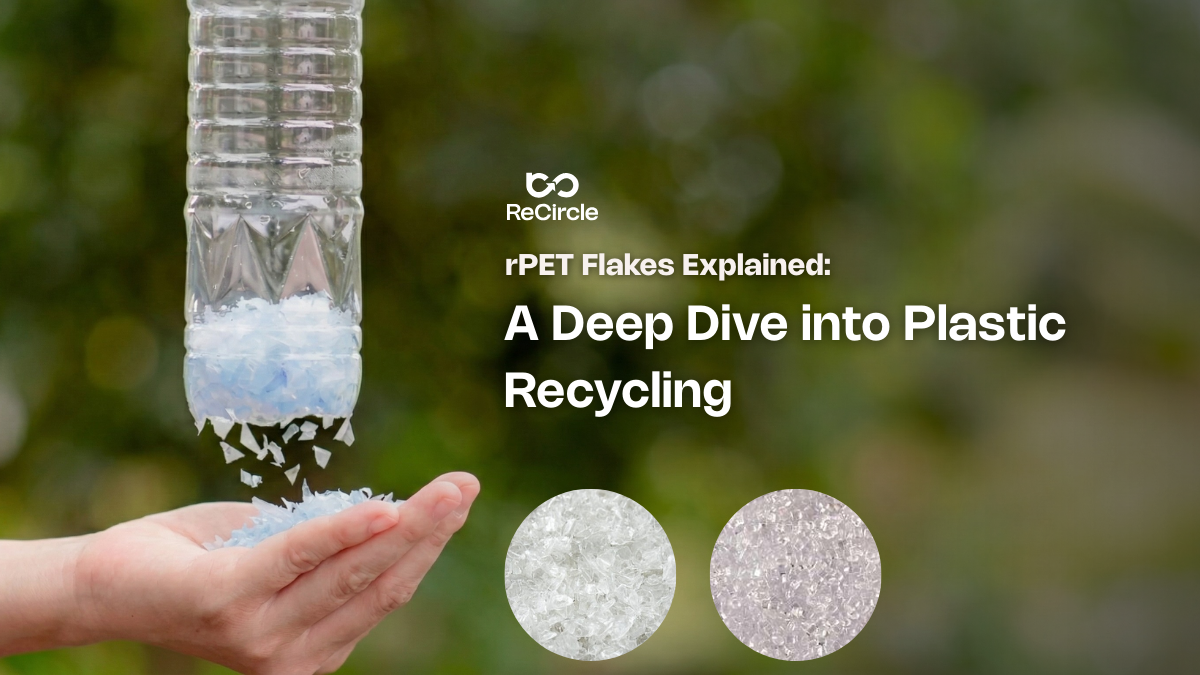
rPET flakes are small fragments of post-consumer PET plastic. PET, or Polyethene Terephthalate, is the material most commonly used in beverage bottles and food packaging.
After collection, bottles are sorted, cleaned, labels and caps are removed, and the plastic is shredded into flakes. At this stage, the material is recycled but not yet remade. It sits between waste and manufacturing.
This is why rPET flakes are the foundation of recycled plastic systems.
PET flakes and plastic granules: understanding the difference
Plastic granules are uniform pellets created after plastic is melted and reshaped. PET flakes come before that step.
This difference matters because flakes reveal how well recycling has been done. Their cleanliness, colour consistency, and contamination levels directly influence the quality of recycled plastic granules produced later.
Strong recycling systems pay close attention to the flake stage, because problems introduced here only grow downstream.
Difference between recycled PET vs virgin PET
Virgin PET is made from fossil-based raw materials. It offers consistency and predictability, which is why it became the default choice for decades.
Recycled PET (rPET) begins its life as waste. Its performance depends entirely on how well it has been collected, sorted, and processed.
When recycling systems are weak, recycled PET can be inconsistent. When systems are strong, high-quality rPET can perform reliably across packaging, textiles, and industrial applications.
The difference is not the material itself. It is the process behind it.
This is why sourcing matters as much as the decision to switch.
The role of rPET flakes in plastic recycling
PET is one of the few plastics that can be recycled multiple times with relatively low loss in quality. As a result, it plays a central role in circular economy models.
rPET flakes enable plastic to be repolymerized and returned to production rather than sent to landfills. They reduce dependence on virgin plastic, lower emissions, and support compliance with Extended Producer Responsibility requirements.
As sustainability targets tighten, many manufacturers actively choose to buy rPET flakes in India to build more resilient supply chains.
Why purity matters more than most people realise
Purity is one of the most overlooked factors in recycled plastic.
Even small amounts of contamination from PVC, multilayer plastics, glue, or labels can weaken material performance, disrupt manufacturing, and limit end-use applications.
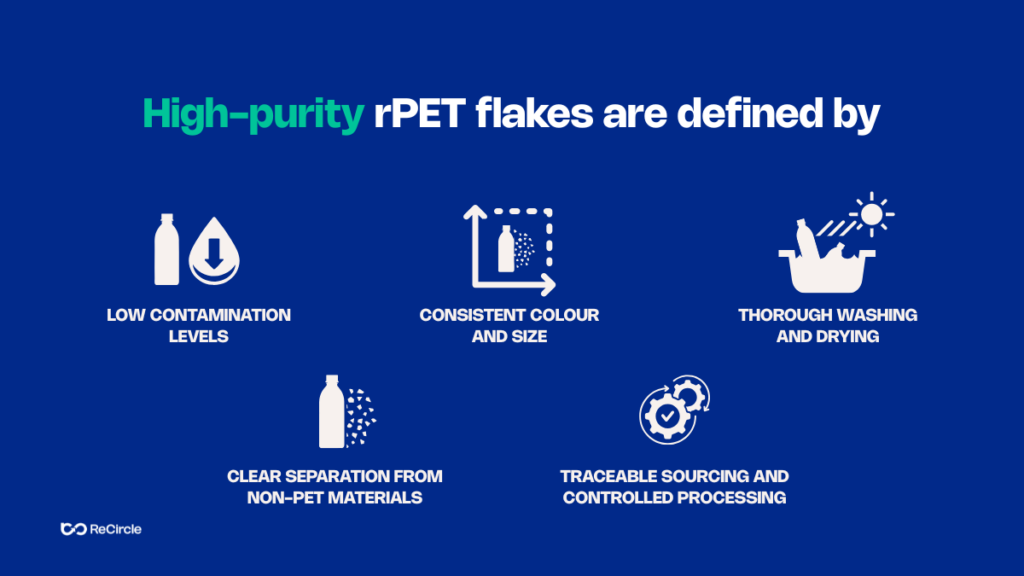
High-purity rPET flakes are defined by:
- Low contamination levels
- Consistent colour and size
- Thorough washing and drying
- Clear separation from non-PET materials
- Traceable sourcing and controlled processing
Purity enables recycled plastic to move beyond low-value applications and into reliable manufacturing use.
Where strong recycling systems make the difference
Reliable recycled plastic does not happen by chance. It is the result of systems designed for traceability, quality control, and ethical sourcing.
This is where companies like ReCircle focus their efforts. By building structured collection networks, ensuring rigorous processing standards, and maintaining material traceability, they help rPET flakes meet both performance expectations and regulatory requirements.
Strong systems turn recycled plastic from a risk into a dependable input.
Choosing the right rPET flakes supplier in India
If you are evaluating rPET flakes suppliers in India, the right questions shape the outcome.
Ask how purity is maintained, how contamination is controlled, and whether material flows are traceable. These details define product consistency, compliance readiness, and long-term reliability.
In plastic recycling, what you start with determines everything that follows.
Closing the loop on plastics.
rPET flakes may be small, but they carry the responsibility of the entire recycling system.
They decide whether plastic remains a problem or becomes part of a working circular economy. And as demand for recycled plastic grows, the importance of high-quality, pure rPET flakes will only increase.
If you are sourcing high-quality rPET flakes and want a supply that is traceable, consistent, and purity-driven, contact ReCircle.
Because building circular systems starts with getting the basics right.