When you look at plastic waste recycling in India, one thing becomes clear very quickly: the problem is huge, the systems are fragmented, and real progress demands discipline, transparency and patience.
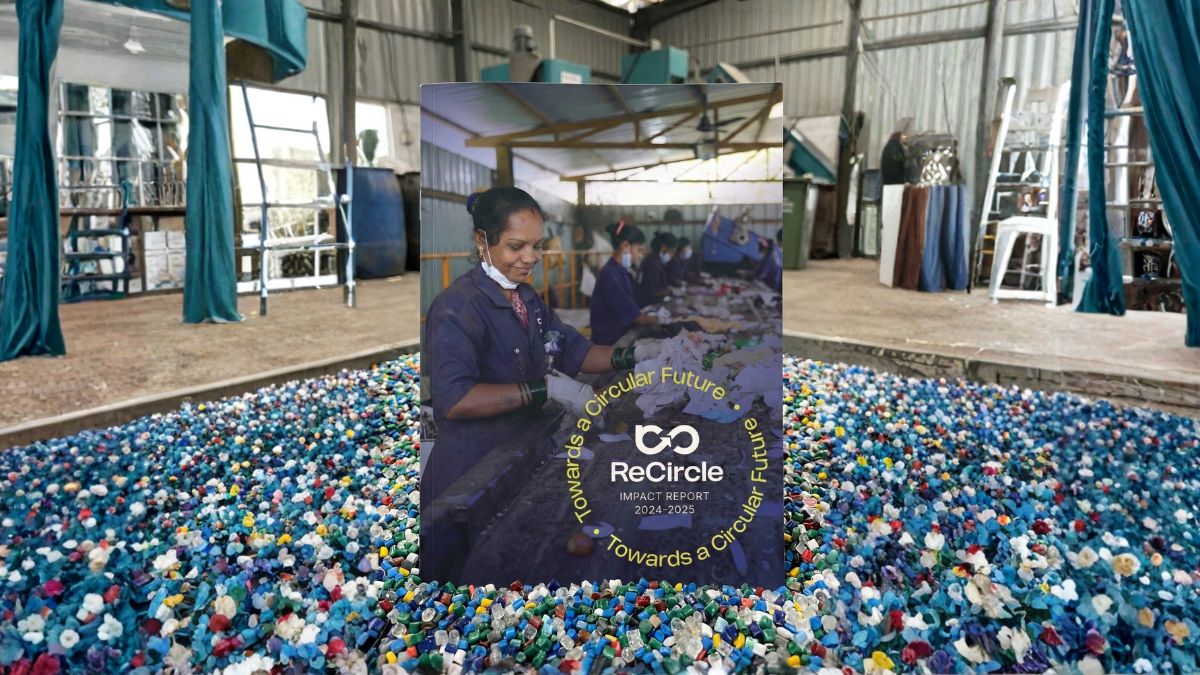
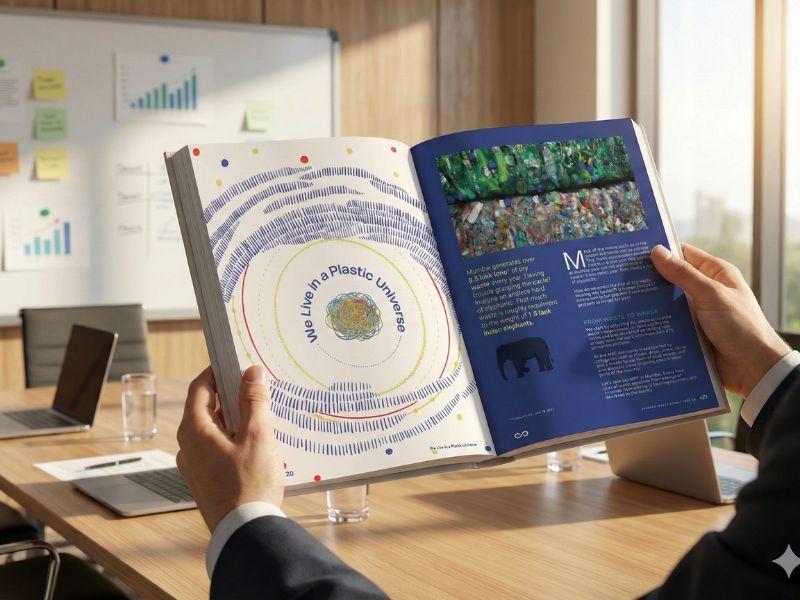
That’s the backdrop to the ReCircle Impact Report 2024-25, a document that doesn’t just talk about impact, but shows what it looks like when professional ethics and methodical systems are applied to a largely unorganised sector.
A decade of turning kachra into maal
India generates over 1,70,000 MT of solid waste every single day. Only about a third of it is properly segregated at source, which is where most downstream problems begin: landfill fires, recycling losses, pollution.
Against that backdrop, the ReCircle impact report tracks a nine-year journey:
- 291,217 MT of dry waste diverted from landfills and the sea since 2016
- Operations spread across 310+ cities, towns and villages
- 3608+ safai saathis meaningfully impacted through better livelihoods, safety and social protection
In FY 2024-25 alone, ReCircle diverted 129,357.99 MT of waste, recovering everything from high-value PET to low-value plastics that usually slip through formal systems. Every hour, an average of 14.97 MT of waste was collected and routed back into the value chain.
From impact numbers to operating discipline
The Impact Report 2024-25 goes beyond topline metrics. It breaks down waste recovery:
- 93,840.70 MT recyclable plastic and 35,059 MT non-recyclable plastic recovered in FY 2024-25
- 4,046 MT of dry waste processed at ReCircle’s Material Recovery Facility (MRF) in Mumbai, where safai saathis segregate, bale and dispatch materials with impressive precision
The report also offers a clear view of how Extended Producer Responsibility (EPR) is being operationalised. In 2024-25, ReCircle worked with close to 80 brands through its EPR services and an additional set of conscious businesses via its Plastic Neutral Program. Together, these partnerships helped move compliance from a checkbox activity to a traceable, data-backed system powered by the ClimaOne digital platform.
As Tusar Pattnaik notes in the foreword, ReCircle has evolved from “waste management agency” to a strong PET collection partner contributing to India’s circular economy – and is now poised to deepen its role across more EPR categories.
Textile recovery and Project Extra Life
One of the most striking sections of the report is on textile waste, an often invisible crisis where India generates 7,800 kilotons of textile waste annually.
This year, ReCircle scaled textile recovery through:
- Bulk collection from households, Waghris, NGOs and institutions
- Project Extra Life, which worked with schools in Mumbai and Pune to recover 1,051 kg of old uniforms and garments and route them into reuse, recycling or waste-to-energy channels
The report maps the full textile loop, from “REWEAR” and “RECYCLE” to “REVAMP” and “RELIFE,” showing how garments move from wardrobes to rags, fibre, yarn and eventually energy, instead of ending up in landfills.
People at the centre of every metric
For a document titled Impact Report 2024-25, the human stories are not an afterthought.
- 97% of safai saathis surveyed said working with ReCircle has improved their quality of life
- 56% of them are women
- ReCircle’s net promoter score among safai saathis stands at 75%, reflecting trust in the organisation and its practices
The report also highlights the Waghris, long-time textile traders who now play a crucial role in ReCircle’s textile recovery network, with access to fair prices and social security measures like health insurance and e-Shram registrations.

Looking ahead: completing the circle
The closing chapter, The Future is a Giant Loop, lays out a clear roadmap. In 2025-26, ReCircle plans to:
- Commission a new facility in Bhiwani, Haryana to produce high-quality rPET flakes, including bottle-to-bottle grade material
- Double down on textile by setting up more recovery facilities and strengthening partnerships across the textile ecosystem
This future-facing work is anchored in the founders’ line that runs through the report: “For us, moving in circles is the way to move forward.”
Read the full Impact Report 2024-25
If you’re tracking plastic waste recycling in India, building EPR strategies, or simply want to see what ethical circularity looks like at scale, the ReCircle Impact Report 2024-25 is worth a close read.
Read the report here → https://recircle.in/impact/
You’ll find the numbers, yes. But you’ll also see the systems, people and partnerships that make those numbers possible.