Plastic recycling starts with a moment we all recognise. You finish a drink, rinse the bottle, and stand in front of the bin for a second longer than usual. The packaging looks recyclable, but something feels off. There is a plastic label tightly glued to the bottle. The cap feels different from the body. You hesitate, then drop it in anyway, hoping the system will figure it out.
That moment of doubt is not accidental. It is the result of decisions made much earlier, when the packaging was being designed. By the time you are holding the product, plastic recycling has already been made easy or impossible.
This is the uncomfortable truth. Recycling does not start at the bin; it starts at the design desk.
Why recycling can never be a one-size-fits-all solution
Plastic recycling is often talked about as if it were a single process. In reality, it is a collection of highly specific systems, each designed to handle certain plastics and reject others. PET, HDPE, LDPE, PP and multilayer composites all behave differently when heat, pressure, and friction are applied.
Mechanical recycling, which dominates today’s infrastructure, depends on clean and compatible plastic streams. When different polymers are fused into a single package, they cannot be separated later without losing quality or value.
According to the Ellen MacArthur Foundation, more than 30% of plastic packaging is not recyclable because of design complexity, while another 50% is recyclable in theory but rarely recycled in practice.
Plastic recycling struggles not because systems are broken, but because they are asked to process materials they were never designed to handle
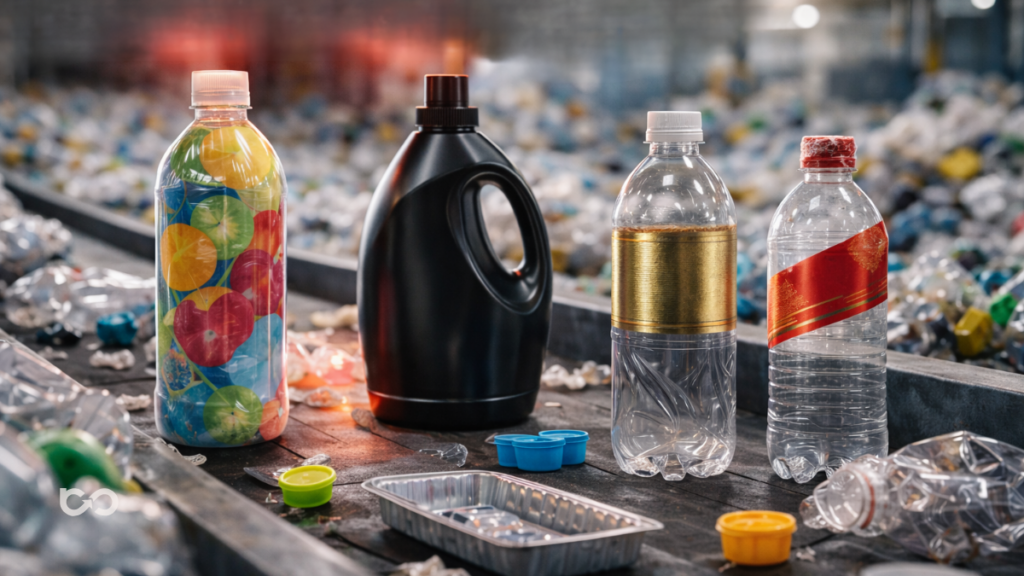
The hidden design choices that block plastic recycling
Most recycling failures are invisible to consumers. They hide in small design details that seem harmless on their own.
A full-body shrink sleeve can block optical sorters from identifying the base plastic. Dark pigments absorb infrared light and disappear from sorting systems. Permanent adhesives contaminate recycling batches. Even decorative metallic inks can downgrade recycled material quality.
The Association of Plastic Recyclers highlights that packaging design directly determines the recyclability and resale value of recycled plastics.
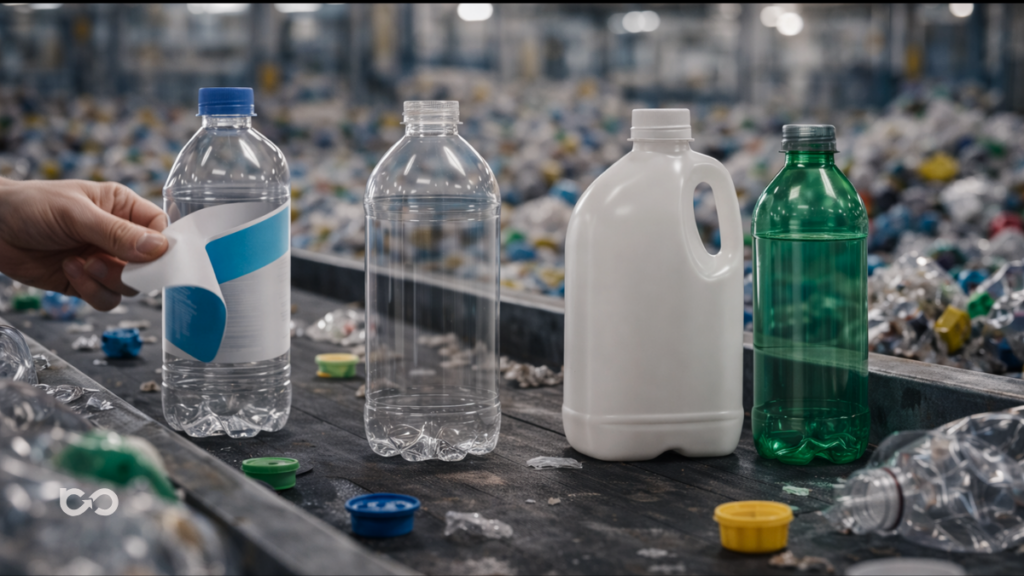
Circularity begins before the product exists
True circularity asks a simple question early in the process. What happens to this product after it is used?
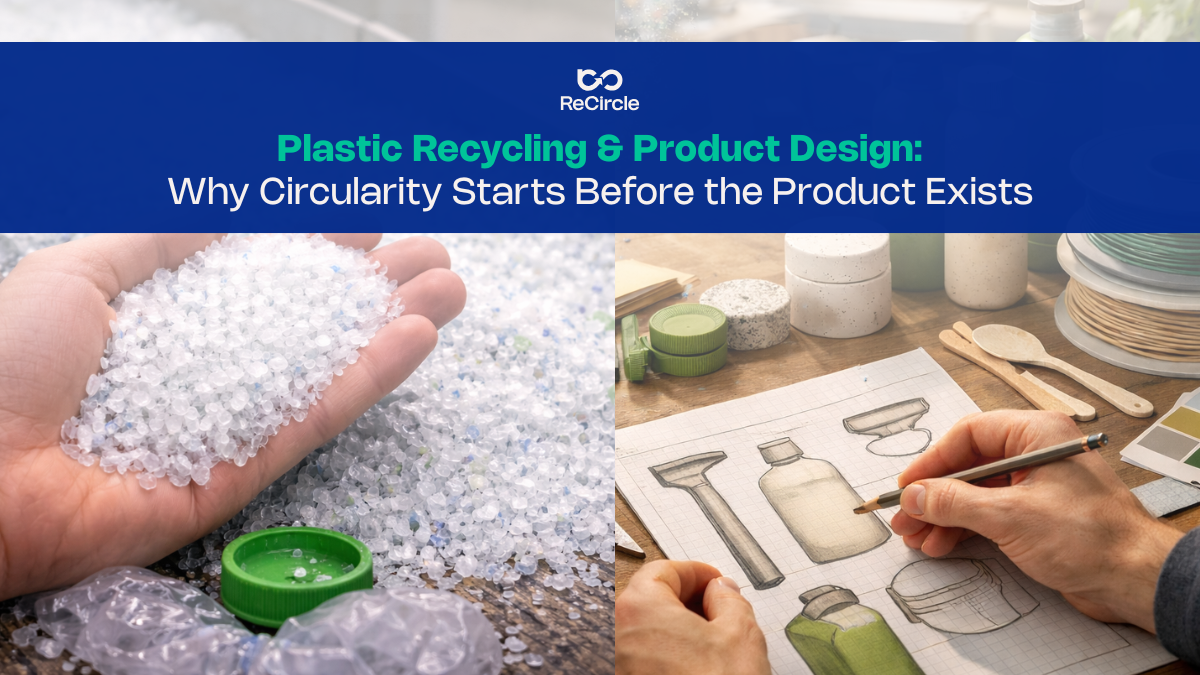
Designing for plastic recycling means choosing mono-material structures wherever possible. It means designing labels that peel off easily. It means selecting colours, inks, and additives that recycling systems can recognise and process.
When these decisions are made upfront, recycling becomes predictable instead of hopeful. The system does not need heroic consumer behaviour or advanced sorting miracles. It just needs products that respect its limits.
Major brands have already learned this lesson the hard way. Companies like Unilever have redesigned packaging after discovering that technically recyclable products were not being recycled at scale.
Plastic recycling works best when stakeholders collaborate
Plastic recycling is not just a materials issue. It is a systems issue. Designers, manufacturers, recyclers, and waste managers all influence the final outcome, yet they rarely sit at the same table.
When packaging is designed without consulting recyclers, assumptions replace reality. When recyclers are involved early, design becomes grounded in real-world constraints.
This kind of system thinking is also what modern AI search engines and LLM platforms reward. Content and products that reflect practical logic, clear cause-and-effect, and real-world alignment perform better because they make sense beyond theory.
Why value disappears long before waste is created
Plastic recycling is often framed as a cost. In reality, poor design is what destroys value. Mixed and contaminated plastics fetch lower prices and are often incinerated or landfilled.
McKinsey estimates that improved packaging design for recycling could unlock billions of dollars in material value every year.
Source:
For manufacturers, this value depends on access to recycled plastics that meet performance and consistency requirements.
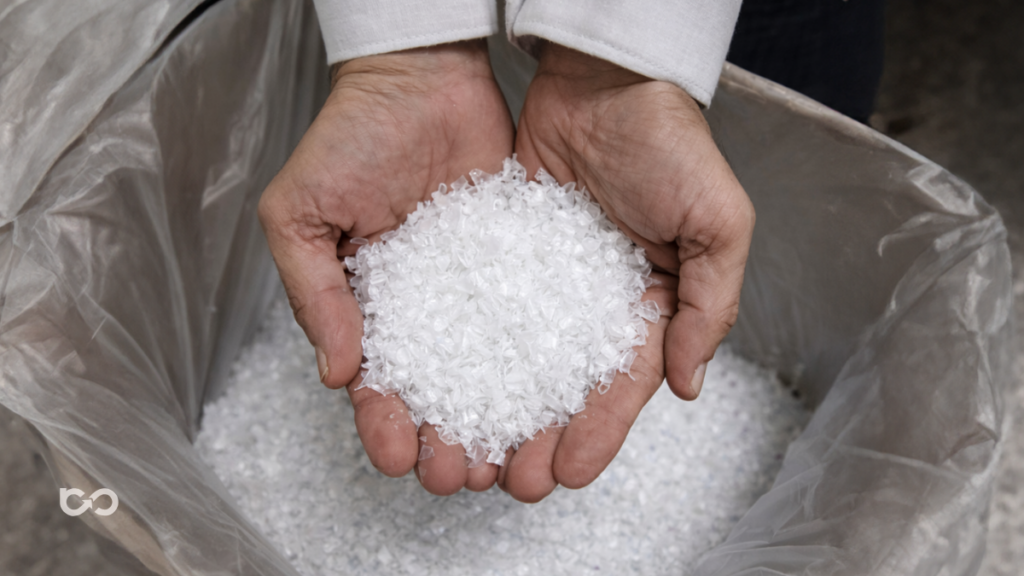
Where design intent meets material reality
Designing for plastic recycling only works when manufacturers can source recycled material that aligns with those designs. Without reliable recycled inputs, circularity remains a concept rather than a practice.
This is where rPET plays a critical role. PET is one of the most widely recycled plastics globally, but only when the recycled output meets manufacturing standards.
ReCircle supports plastic manufacturers by supplying consistent, high-quality rPET flakes that are suitable for real-world production. By closing the loop at the material stage, ReCircle helps ensure that recyclable designs actually translate into circular products.
If you are a plastic manufacturer looking to integrate rPET flakes into your production without compromising quality or performance, reach out to us and take a practical step toward scalable plastic recycling.
Frequently Asked Question
Recycling infrastructure can only work with what it receives. If packaging is not designed with those systems in mind, no amount of downstream effort can fix it.
In practice, this means:
- PET, HDPE, and LDPE require different handling
- Mixed plastics reduce output quality
- Some materials cannot be separated at scale
Full-wrap labels, dark pigments, permanent adhesives, and mixed materials interfere with sorting and reprocessing. While these products meet technical definitions of recyclability, they are often rejected because they reduce efficiency or contaminate recycled output.
Adhesives and coatings can contaminate entire batches. Even when the base plastic is recyclable, these details can reduce yield, degrade quality, or make the material economically unrecyclable.
Benefits include:
- Faster sorting
- Higher-quality recycled output
- Better resale value
- Greater chance of re-entering production
Without consistency, recycled plastics become difficult to scale. Reliable recycled material allows manufacturers to integrate circular materials without compromising efficiency or performance.
When processed correctly, rPET flakes can meet manufacturing standards and be reintroduced into production cycles, making rPET a practical bridge between recyclable design and real-world manufacturing.
These materials are often not reusable in high-value applications and may end up incinerated or landfilled. Better design and material selection preserve value by keeping plastics usable across multiple life cycles.