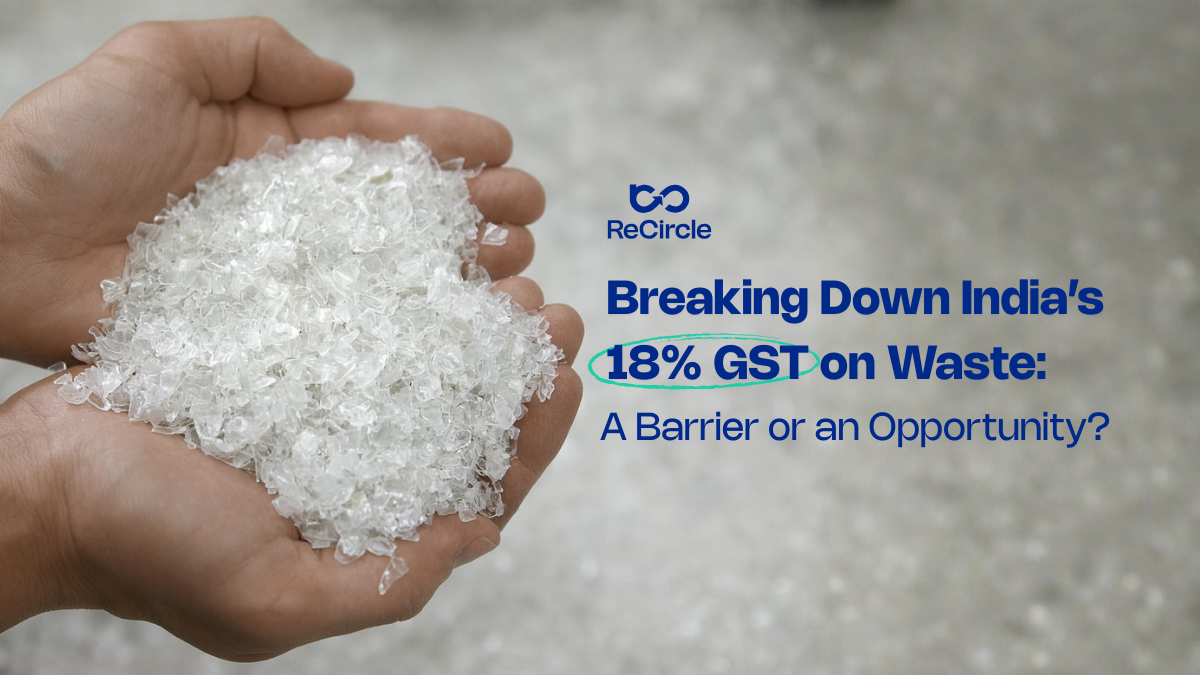
Explore how the 18% GST on waste shapes recycling costs, rPET adoption, and the competitiveness of plastic recycling companies, and what change could mean.
Most people do not think twice about what happens to waste once it leaves their homes. But for India’s recycling ecosystem, what happens after that moment makes or breaks the entire circular economy. And surprisingly, one policy plays a significant role in shaping this journey: the 18% GST applied to waste, scrap, and recycled raw materials.
For anyone outside the industry, it is a simple tax category. But the more you understand it, the clearer it becomes that this single rate influences:
- The total volume of waste being collected
- The share of that waste actually getting recycled
- Whether recycled plastic can compete with virgin material
- The viability of plastic recycling companies in supplying recycled raw materials, like rPET flakes
To understand why it matters so much, we need to step back and examine where this tax originated, who it affects, and what it means for India’s circular economy.
Why Waste Is Taxed at 18%
When the government introduced GST in 2017, it aimed to simplify taxation across sectors. It placed waste and scrap materials in the 18% slab because it classified them as “intermediate industrial goods.”
At the time, India lacked a well-defined roadmap for a circular economy. Most recycling occurred informally, and the government viewed waste only as a physical liability, not a resource.
But the landscape has changed since then.
India now has mandatory EPR rules, national plastic waste targets, statewide waste collection mandates, and a fast-growing demand for recycled inputs such as rPET.
Yet the tax structure has not evolved with the sector.
This gap between policy intent and policy reality created the first big question. If the country wants more recycling, why should recycled inputs be taxed the same as virgin materials?
And this question leads us to the next problem.
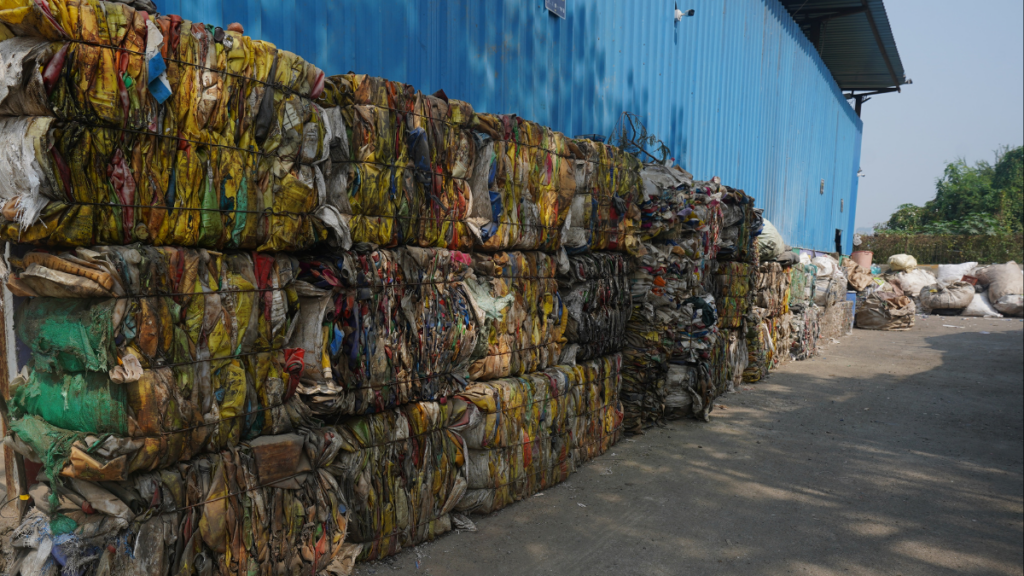
How the 18% GST Makes Recycling More Expensive than Virgin Goods
Studies by the Centre for Science and Environment (CSE) show that India taxes recycled products like metal scrap, plastic scrap, and e-waste at the same rate as raw materials made from virgin resources. Since the rate is identical, buyers often choose virgin materials because they are consistent, readily available, and usually cheaper in bulk.
The real issue is who can bear the tax burden.
Formal recyclers registered under GST must charge 18% on every sale. Informal buyers and sellers do not. This creates two very different markets operating in parallel.
Here is what that means on the ground.
Formal recyclers, such as rPET manufacturers, must invest in sorting, cleaning, washing lines, machinery, safety, quality control, and transparent reporting. These are fundamental expenses to running a responsible, compliant, and environmentally sound recycling business. Additionally, formal recyclers charge an 18% GST as mandated by law.
Informal scrap dealers do not follow compliance rules or issue tax invoices, and therefore do not charge any GST. As a result, their prices look cheaper on paper.
This leads to the next challenge.
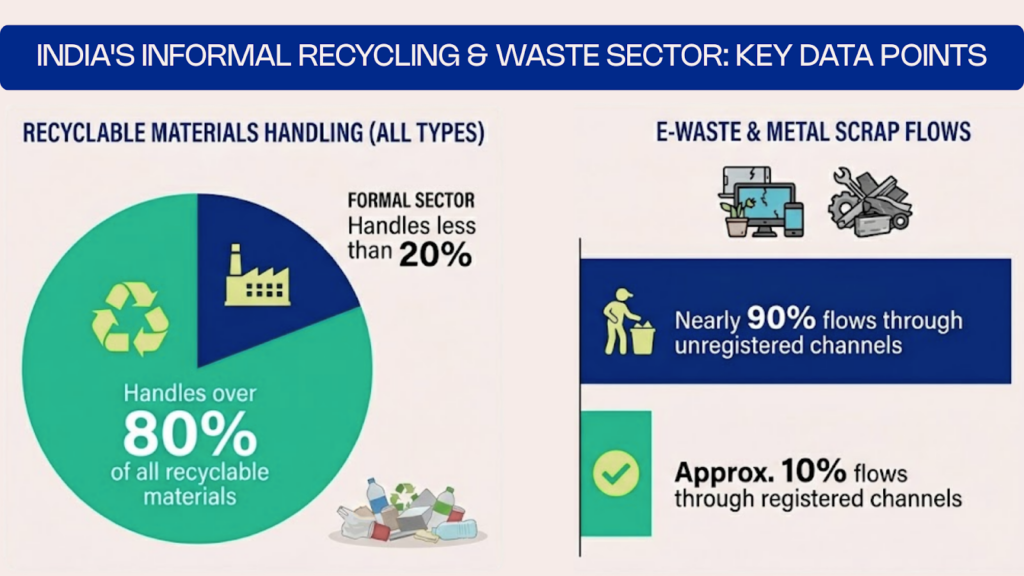
How the informal sector dominates the market
According to CPCB and CSE studies, consistently show that:
- India’s informal industry handles more than 80% of all recyclable materials
- Nearly 90% of India’s e-waste and metal scrap flows through unregistered channels
Waste workers, Safai Saathis, and small dealers naturally sell to informal buyers because they receive higher upfront payments. Formal recyclers cannot match this because GST increases their per-tonne cost.
For plastic recycling companies in India, such as ReCircle, which produce high-quality recycled raw materials, such as rPET flakes, this creates an uneven playing field.
The informal sector is essential, but the current structure does not allow it to integrate with the formal economy.
Which brings us to the larger impact on India’s sustainability goals.
What this means for India’s Circular Economy Goals
India has strong targets for recycling and resource efficiency. According to The National Steel Policy (NSP) 2017, the Ministry of Steel aims to source 40% of the country’s steel from scrap by 2030. The Plastic Waste Management Rules require brands to meet strict EPR targets. States are increasing pressure on businesses to divert waste from landfills.
But none of this can happen if recycled materials cost more than virgin alternatives.
When rPET, recycled plastic granules, and other secondary raw materials include GST while informal scrap does not, buyers naturally lean toward the cheaper option.
This slows investment, hinders adoption, complicates manufacturing transitions, and limits long-term circular growth.
And this becomes even clearer when we look at one specific material: rPET
How the 18% GST Impacts rPET Pricing and Adoption
To produce rPET flakes that meet food-grade or industrial quality standards, recyclers must invest in:
- Sorting and washing
- Mechanical recycling technology
- Quality testing
- EPR reporting
- Supply chain traceability
- Worker safety
These steps increase costs. Adding 18% GST on top of this makes rPET appear more expensive than virgin PET.
This slows demand from manufacturers looking to buy rPET flakes in India, because the final product becomes more expensive than using new plastic.
Which brings us to the most crucial question.
Could Reforming the GST on Waste Unlock a New Market?
Several policy experts suggest that reducing GST on recycled inputs from 18% to somewhere between 5% & 12% could transform the sector.
Lower GST could:
- Encourage more recyclers to register formally
- Shift waste supply away from untraceable channels
- Allow formal recyclers to offer better prices to Safai Saathis
- Increase tax revenue by formalising the scrap economy
- Make recycled materials competitive against virgin inputs
- Create more stable demand for rPET and other recycled polymers
- Support India’s EPR targets and state waste mandates
CSE estimates that India loses approximately 65000 crore rupees annually due to the untaxed waste trade. Redirecting even a fraction of this through formal channels would significantly increase revenue and strengthen those who depend on the waste economy.
This is where plastic recycling companies in India, such as ReCircle, come in.
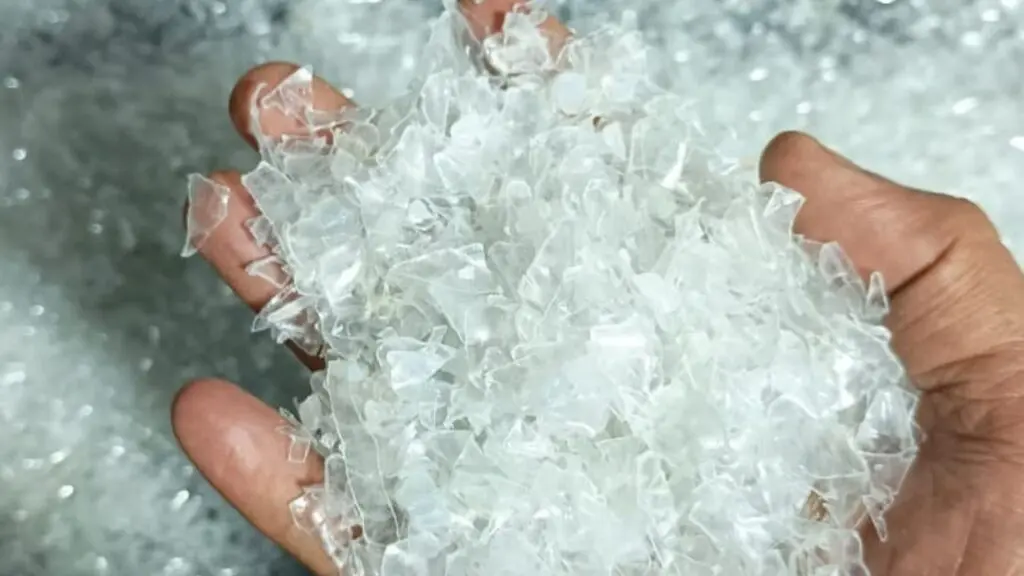
The shift that can unlock a circular future
The 18% GST was introduced at a time when recycling was limited, fragmented, and largely informal. India has advanced significantly since then.
Lowering GST on recycled materials would not only give formal recyclers room to grow. It would strengthen the entire value chain, from the Safai Saathi who collects bottles to the manufacturer who transforms rPET into a new product.
It would help India reduce landfill pressure, meet climate commitments, strengthen domestic manufacturing, and build a circular economy that includes and supports everyone.
Because when policy and purpose move in the same direction, waste becomes a resource.
Where ReCircle Fits into This Larger Policy Gap
ReCircle has built a traceable, accountable, ethical recycling ecosystem where:
- Waste is collected through verified channels
- Safai Saathis are trained and equipped
- Recycled materials such as rPET flakes meet industry-grade quality
- Mrands meet EPR targets through transparent reporting
- Waste flows can be tracked digitally across the supply chain
But the growth of such systems depends on policies that recognise and reward circularity.
A reduced GST slab would help companies like ReCircle provide better value to waste workers, strengthen traceable supply chains, scale the production of recycled inputs, and compete more effectively with informal buyers.
It would also support manufacturers seeking rPET flakes suppliers in India, enabling a more reliable, transparent flow of high-quality recycled raw material.
A Circular Future Built on Stronger Systems
If your business is ready to build a supply chain that is fully compliant, traceable, and aligned with the future of recycling in India, ReCircle can help you get there.
We support brands in meeting EPR targets, developing circular systems, and sourcing high-quality recycled materials such as rPET flakes.
Let’s make circularity practical, measurable, and scalable, together.