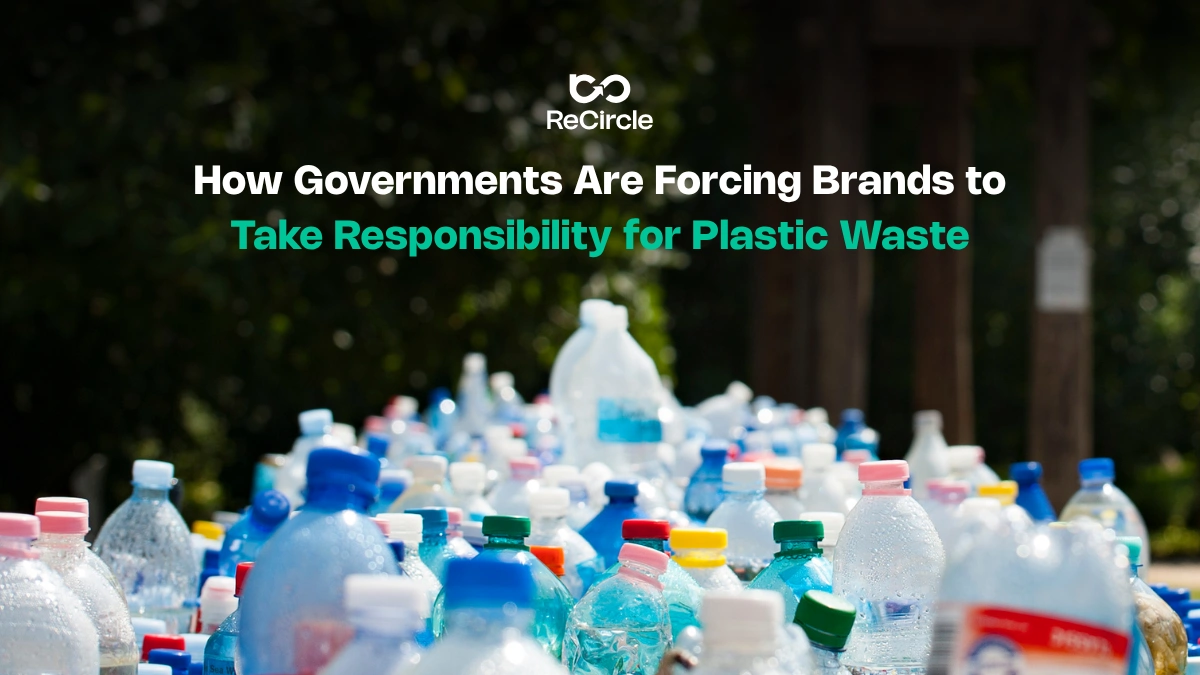
For a long time, the life of a plastic bottle followed a simple, straight line. A company made it. A store sold it. A consumer used it. And then the environment inherited it. Landfill. Ocean. Soil. Done. Nobody paid. Nobody was accountable. The financial and moral responsibility ended the moment plastic hit the bottom of a trash can.
That straight line is now being forcibly bent into a circle.
The Era of “Produce and Forget” Is Over
Governments are no longer asking brands to be sustainable. They are legislating it with hard deadlines, financial penalties, and compliance frameworks embedded into how brands design, source, and sell products.
The message from regulators in 2026 is not subtle: if you profit from the packaging, you own its afterlife.
1. Why Brands Cannot Look Away Anymore
We produce over 400 million tonnes of plastic waste every year. Less than 10% has ever been successfully recycled. The rest is in soil, water, and increasingly human bloodstreams. Governments are intervening because they cannot absorb the cost anymore:
- Municipalities are running out of landfill space
- Plastic litter management is bleeding public budgets dry
- Voters are done paying for a mess they did not make. The free ride is finished.
2. Linear Economy vs. Circular Economy: The Shift That Rewires Everything
The old model was a straight line: Factory → Brand → Consumer → Bin Brand walks away. Plastic disappears into someone else’s problem.
The new model forces a loop: Bin → Aggregator → Processor → Factory → repeat Governments are making brands into Reverse Supply Chain Integrators responsible not just for selling a product but for recovering the waste it leaves behind.
Once you internalize that cost, recycling stops being an ethical choice and becomes the only rational financial one.
3. Three Pressures That Made 2026 the Tipping Point
- The landfill crisis: Cities from New Delhi to New York are drowning in garbage. Expanding landfills is politically impossible and geographically running out of room.
- Ocean pollution: The UN Global Plastic Treaty is pushing nations to stop plastic from reaching water, which means catching it domestically before it ever gets close.
- Climate math: Virgin plastic is fossil fuel dependent and carbon heavy. Mandating recycled content cuts emissions and reduces crude oil dependency in one policy move. None of these pressures are reversing. All of them are intensifying.
4. The Three Tools Governments Are Using
- Extended Producer Responsibility (EPR): The centerpiece. You made the packaging; you funded its recovery. EPR is the legal backbone of the entire reverse supply chain movement.
- Single-Use Plastic Bans: Straws, stirrers, thin carry bags, and items that cannot meaningfully be recycled are simply being removed from the market. Brands adapt or lose shelf space.
- Recycled Content Mandates: The newest lever, and arguably the most powerful. Governments are not just saying collect waste; they are saying use it. A mandatory 30–50% recycled content requirement creates guaranteed demand for the recycling industry and forces brands to actually close the loop rather than just fund the appearance of doing so.
5. What EPR Actually Demands from a Brand
Three steps. No shortcuts.
- Collect: Fund the retrieval of a specific plastic tonnage from the market
- Recycle: Prove that material reached an authorized facility and became raw material again
- Report: Submit digital proof to the government that the loop closed. The design incentive is built in: brands using complex multi-layered plastic face higher reverse supply chain costs. That financial pressure pushes packaging simplification from day one before the product is even sold.
6. India’s Model: Rigorous, Digital, and Getting Stricter
India moved fast. The Plastic Waste Management Rules updated through 2026 built one of the most comprehensive digital EPR systems anywhere. Under the CPCB, all Producers, Importers, and Brand Owners must register on a centralized portal. Every recycling claim is backed by a credit purchased from a registered recycler, tied to a physical transaction, supported by an invoice. [Source: CPCB EPR Portal Guidelines 2026] No paper trail, no credit. The system does not take your word for it.
7. This Is a Global Wave, Not a Local Policy
- EU: Plastic tax of €800 per tonne on non-recycled packaging waste. [Source: EU Plastics Strategy]
- United States: California (SB 54) and Maine require 100% recyclable or compostable packaging by 2032. [Source: California Department of Resources Recycling and Recovery]
- China: Bans on non-degradable bags and straws in major cities, reshaping what the world’s largest plastic producer is allowed to sell The direction is the same everywhere. The pace differs. The destination does not.
8. What Changes Inside a Business
This is not just a compliance department problem anymore.
- Procurement cannot optimize only for cost, recyclability, and compliance status are now sourcing criteria.
- Finance needs reverse supply chain costs budgeted as a fixed operational line, not a surprise year-end expense.
- Product design has to factor in end-of-life recyclability before a product launches, not after it has already been on shelves for three years. There is an upfront cost. But brands that build this infrastructure early carry a structural cost advantage as the recycled resin market scales.
9. The Upside Nobody Talks About Enough
Compliance first brands are winning in ways that go beyond avoiding fines. Consumers in 2026 are genuinely skeptical of sustainability claims. A brand with a verified, fully traceable recycling record earns a kind of trust that no campaign spend can replicate. Sourcing away from virgin plastic also removes exposure to crude oil price swings which have been brutal and unpredictable. And as large retailers push supplier compliance requirements down the chain, brands already operating clean supply chains skip the qualification friction entirely. Early movers are not just compliant. They are positioned differently.
10. The Ecosystem Behind It All
No brand closes this loop alone. The reverse supply chain is collaborative:
- Safai Saathis: Frontline collectors recovering plastic from the informal sector, often the first and most critical link
- Recyclers: Industrial processors turning waste into usable pellets and flakes
- Reverse Supply Chain Integrators: Partners managing the broken half of the loop, bridging collection and re-entry into production
- Tech platforms like ClimaOne: The layer that makes every kilogram traceable, verifiable, and audit-ready. Without this, recycling claims are just claims.
11. What Comes Next
The next five years tighten everything. Digital Product Passports are coming, where scanning a QR code on any product shows exactly where that packaging goes after disposal. Traceability will stop being a differentiator and become a baseline requirement. Brands building that infrastructure now will not be scrambling when that standard lands.
Compliance Is the New Competitive Position
The brands treating EPR as a box ticking exercise are already falling behind. The ones building real reverse supply chain capability that is traceable, verified, and audit-ready are creating a business that fits the world as it actually exists in 2026, not as it existed a decade ago. Governments mandated accountability because the planet ran out of room for the old model. That is not changing.
Frequently Asked Questions
1. Is EPR just another tax?
No. A tax goes into a general government fund. EPR investment goes directly into building waste collection and recycling infrastructure; it is a targeted operational spend, not a revenue mechanism for the state.
2. What happens if a brand ignores these laws?
In India, the Jan Vishwas Act and CPCB guidelines allow Environmental Compensation fines running into millions, plus potential suspension of manufacturing licenses. [Source: Ministry of Law and Justice, India] It is not a warning letter situation anymore.
3. Does FSSAI allow recycled plastic in food packaging?
Yes. As of March 2026, FSSAI authorized several plants producing food grade rPET opening recycled content compliance to food and beverage brands specifically. [Source: Food Safety and Standards Authority of India]
4. Why does traceability matter so much?
Without it, the same tonne of plastic can be sold as a recycling credit to multiple companies. Digital traceability single source, chain of custody documented is what separates a real credit from a fraudulent one. Regulators know the difference now.
5. Can small businesses afford EPR?
Most frameworks include de minimis thresholds exempting very small businesses. But as large retailers push compliance requirements through their supply chains, participation filters down faster than most small suppliers expect.
6. What is the difference between recyclable and recycled?
Recyclable means it could be processed. Recycled means it already was. Current laws are moving from the first standard to the second, a much harder bar to meet and a much more honest measure of actual impact.
7. How does the reverse supply chain actually help the environment?
Every kilogram routed from the bin back to the factory is a kilogram that did not enter a landfill, ocean, or open burn site. It reduces virgin material demand, cuts carbon emissions from plastic production, and keeps plastic in use rather than in the environment.