There’s a common assumption in the industry that all rPET flakes are more or less the same, as long as they meet basic specifications. It sounds reasonable, and for a long time, people did operate like that.
But when you actually look at how brands are sourcing today, that thinking starts to fall apart.
Because in reality, not all rPET flakes are treated equally. And the difference is not always visible at first glance.
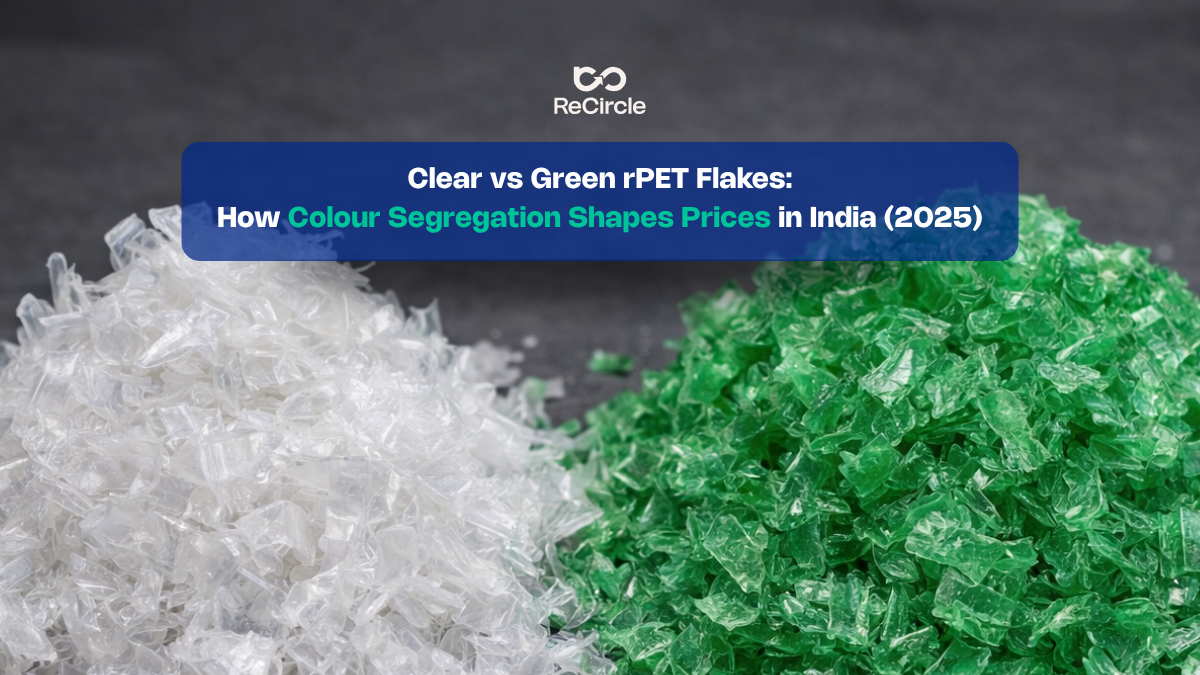
Colour, which many still treat as a secondary detail, is slowly becoming one of the biggest factors in how material is priced, accepted, or even rejected. The gap between clear, blue, and green is no longer just technical. It is commercial now and shaping decisions across India’s plastic recycling ecosystem.
What does colour segregation change in practice?
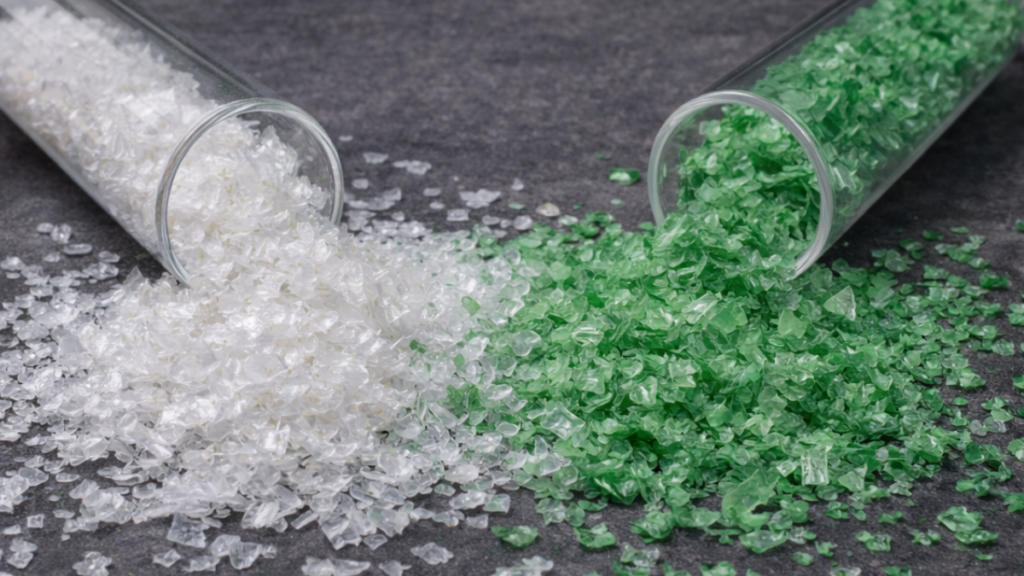
When post-consumer PET bottles are processed through plastic recycling systems in India, they don’t remain in a single mixed pile for long. They are sorted, sometimes well, sometimes not so well, into clear, blue, and green streams.
Now here’s where it gets interesting. This sorting is not just about making things look neat. It decides what that material can become next.
Clear recycled PET has the widest range of applications. It can go back into bottles, food-grade packaging, or even high-quality textile fibres. But when colours mix, even slightly, the final output starts to lose that flexibility. The material becomes restricted, and with restriction comes a decline in value.
Why clear PET keeps winning
Clear rPET flakes have become the preferred choice for most brands, especially in India, where packaging standards are tightening.
It’s not just preference, though. There’s logic behind it.
Clear flakes:
- Allow better colour control in final products
- Are easier to process without extra correction steps
- Align more easily with food-grade and compliance requirements
Because of these factors, rPET flakes in the clear category tend to move faster in the market and command stronger off-take prices. Brands don’t have to think twice.
What happens with blue and green PET bottles?
Blue and green rPET flakes are not entirely unwanted, but they do come with limitations that brands can no longer ignore.
The issue is more than just colour. It is what the colour does during processing.
Even a slight tint can:
- Affect the final product’s appearance
- Limit its use in certain packaging formats
- Require additional blending or correction
So while these flakes still have demand, especially in textiles or non-food applications, their price naturally sits lower than that of clear recycled PET. Buyers tend to be more cautious here.
Mixed flakes: where segregation gaps impact material quality
This is where most of the inefficiency creeps in. When segregation is not done properly, you get mixed recycled plastic flakes. And this creates a chain reaction of problems that no brand really wants to deal with.
Inconsistent colour means inconsistent output. And that means:
- Higher rejection rates during production
- Extra sorting or reprocessing costs
- Lower confidence in long-term supply
So even if the base material is technically usable, its market value drops. Not because it’s useless, but because it’s unpredictable.
Why brands in 2025 are looking at this more seriously
There was a time when brands would just buy rPET flakes based on availability and price. That approach doesn’t really work anymore.
With stricter EPR Obligations in India and increasing pressure to adopt recycled PET in packaging, brands are being forced to think differently.
They now look beyond cost. They ask:
- Can this material meet compliance standards?
- Will it behave consistently in production?
- Can the supplier guarantee quality batch after batch?
And this is exactly where colour segregation becomes a pricing factor, not just a processing detail.
The gap most suppliers are still struggling with
Even today, mixed collection systems still dominate a significant portion of the supply chain. Bottles come in without proper sorting, and the infrastructure to separate them efficiently is still catching up.
As a result, many rPET flakes suppliers end up offering material that varies from batch to batch. Some might be slightly tinted. Some might have mixed-coloured traces.
And while that might seem manageable at first, it creates hesitation among brands looking to scale their use of recycled plastic.
How ReCircle is building consistency
ReCircle’s processing approach is designed to ensure that rPET flakes do not vary significantly from one lot to another. This is where many suppliers struggle, especially when dealing with mixed or inconsistent feedstock.
For brands, this approach translates into very real operational advantages:
- More predictable production output, with fewer colour variations in the final product
- Reduced need for reprocessing or correction, saving both time and cost
- Lower rejection rates, especially in applications with stricter quality requirements
- Greater confidence in long-term sourcing, as batch consistency improves planning
Over time, this kind of consistency improves efficiency and changes how pricing is evaluated.
When brands no longer need to factor in hidden risks or additional processing costs, they are far more willing to commit to a stable offtake agreement with rPET flakes suppliers who can deliver this level of reliability.
This shift is only going to get stronger
As India’s plastic recycling systems continue to evolve, colour segregation is slowly becoming a basic expectation rather than a value addition.
Clear rPET flakes will likely continue to see premium demand. Blue and green will remain relevant but within defined applications. Mixed recycled plastic flakes may find it harder to compete unless sorting improves significantly.
So the conversation is changing. It is no longer just about whether rPET flakes are available but about how usable they are.
If you are evaluating rPET flakes, this is the question to ask
Before you look at pricing, it helps to pause and ask one thing. How well is the material segregated?
Because that one factor quietly influences everything else. Processing ease, product quality, and finally, the price you end up paying or negotiating.
In a market where colour defines value, working with the right rPET flakes supplier can directly influence your pricing and production outcomes. Connect with ReCircle to build a more reliable sourcing strategy.
Frequently Asked Questions
- Inconsistent colour in final products
- Higher rejection rates during production
- Additional sorting and reprocessing costs
- Lower confidence in long-term supply
- Consistency in colour and quality across batches
- Ability to meet compliance and food-grade standards
- Reliable and traceable sourcing processes
- Reduced need for reprocessing at their end
- More consistent output quality
- Fewer machine adjustments during processing
- Lower material wastage and rejection rates
- Smoother and faster production cycles