We don’t really see waste management in India. Instead, we experience it as an absence: an absence of trash in our bins, an absence of waste on the streets and an absence of whatever we threw away.
But that disappearance is an illusion.
What we call waste management is actually a chain of human decisions, movements, and labour that begins the moment something leaves your hand.
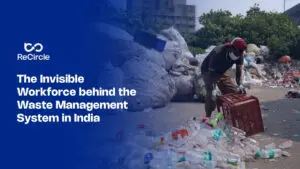
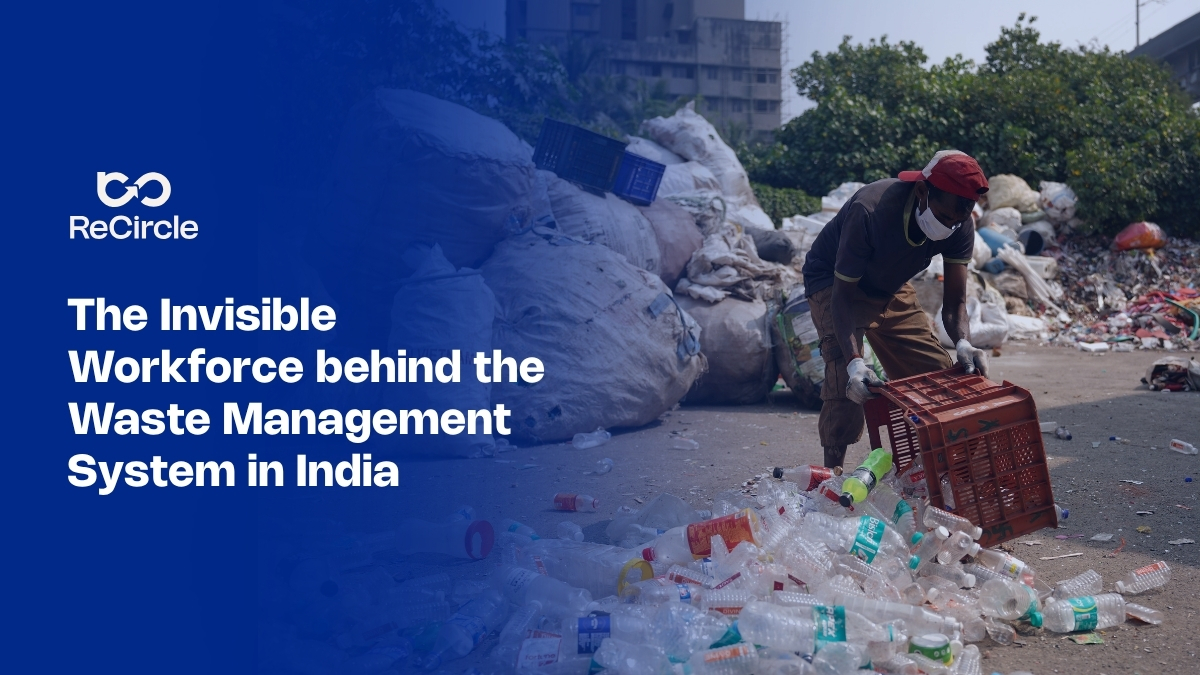
Early in the morning, long before most cities are fully awake, thousands of safai saathis (waste workers) are already at work, moving through streets, bins, and dumping grounds, sorting through what the rest of us have discarded without a second thought.
By the time your day begins, much of that waste has already been collected, separated, and pushed back into the economy.
That’s where waste management in India really starts, not at the point of disposal, but at the point of recovery.
Who’s really keeping India’s waste management system running?
India’s waste management system was never neatly designed. It is an informal network that grew out of need, shaped by poverty, survival, and a kind of everyday ingenuity that rarely gets acknowledged.
At the centre of this system are nearly 1.5 million safai saathis. They are the first link in a long chain, collecting, sorting, and moving waste into the recycling economy. Without them, plastic waste management in most cities would simply fall apart.
Their work feeds into a layered network. Waste moves from safai saathis to kabadiwalas, then to informal recyclers, processors, and, finally, manufacturers. Each step adds value to materials, especially in plastic recycling, but it also reveals something uncomfortable. The further you move up the chain, the more formal and profitable it becomes, while those at the bottom continue to operate with the least security.
And despite being so essential, most of us couldn’t name even one safai saathi in our own neighbourhood.
The Reality Behind Plastic Recycling in India
It’s easy to talk about plastic recycling in India in terms of tonnage and targets, but the reality on the ground tells a different story. Many safai saathis work in conditions that would be considered unacceptable in any formal sector job.
Take the experience of a worker in Mumbai who recalls sorting waste in open dumping grounds, exposed to heat, fumes, and toxic materials without any protective gear. This isn’t an exception. It’s the norm.
According to the United Nations Development Programme, waste workers face severe health risks and systemic marginalisation despite their critical role in the ecosystem. The occupational hazards are not minor inconveniences. They include chronic respiratory illness, skin infections, musculoskeletal injuries, and prolonged exposure to hazardous leachate.
There’s also a psychological toll that rarely gets discussed. Social stigma continues to follow them, shaping how they are treated, where they can live, and what opportunities are available to them.
The Policy Blind Spot in Waste Management
While India has made progress in formalising waste management systems, many policies still overlook the people who make the system function.
Efforts to streamline waste collection and improve traceability, especially in plastic waste management, often focus on infrastructure and compliance. But they don’t always account for the workers whose livelihoods are tied to existing informal networks.
Formalisation without inclusion can push these workers further into precarity.
Even laws like the Unorganised Workers Social Security Act, 2008, intended to offer protection, have struggled to deliver meaningful change for waste workers. Reports such as Global Information Society Watch highlight how these frameworks fail to fully recognise their vulnerabilities or provide a clear path for economic mobility.
A recent partnership between Hindustan Unilever and UNDP aimed to connect 20,000 safai saathis to welfare schemes. The fact that such an intervention was needed at this scale shows how disconnected these workers remain from basic protections.
Could EPR be the turning point we’re missing?
Extended Producer Responsibility is often discussed in terms of compliance and targets, but it also presents a real opportunity to rethink waste management in India.
The current recycling ecosystem already depends heavily on informal workers. Instead of replacing them, EPR frameworks can integrate them as recognised stakeholders.
With the right design, traceability systems can ensure that the people collecting and sorting waste are not just part of the process, but are fairly compensated for it. This is especially relevant for plastic recycling, where supply chains are deeply tied to informal labour.
ReCircle has been actively exploring this space, demonstrating how EPR obligations can align with inclusive growth if approached thoughtfully.
What does it look like when the system actually includes people?
At ReCircle, the focus has been on building systems that don’t erase informal workers but bring them into the fold with dignity.
This means channelling philanthropic and corporate funds towards:
- Fair and predictable income structures
- Access to government welfare schemes
- Safer working conditions with proper equipment
- Digital traceability that recognises their contribution
The idea is simple but often overlooked. If waste management systems rely on these workers, then those systems should also work for them.
Can a circular economy really work if it excludes its own workers?
There’s a popular narrative around circular economy models, especially in plastic recycling, that focuses heavily on materials. Reduce, reuse, recycle. Close the loop.
But a system cannot truly be circular if it excludes the very people who keep it running.
Circularity should not stop at materials. It should extend to dignity, income distribution, and long-term security for workers. Otherwise, we’re just building efficient systems on top of unequal foundations.
What the Next Decade Demands
Waste management in India needs to evolve to formally recognise safai saathis as essential contributors.
This includes:
- Integrating them into EPR frameworks as verified participants
- Linking their work to climate finance and carbon or plastic credit markets
- Creating systems where their labour is measurable, traceable, and fairly compensated
The shift will not happen overnight. But it’s necessary. Because the truth is, India’s waste management system already works. It’s just that the people who make it work have been left out of the conversation for far too long.
At ReCircle, we are working closely with partners to channel CSR and philanthropic capital toward exactly these outcomes, building models in which waste management is not just efficient but equitable.
If you’re serious about climate impact, circular economy, and long-term systems change, partner with ReCircle to turn waste management into a system that works not just for materials but also for the people who make circularity possible.