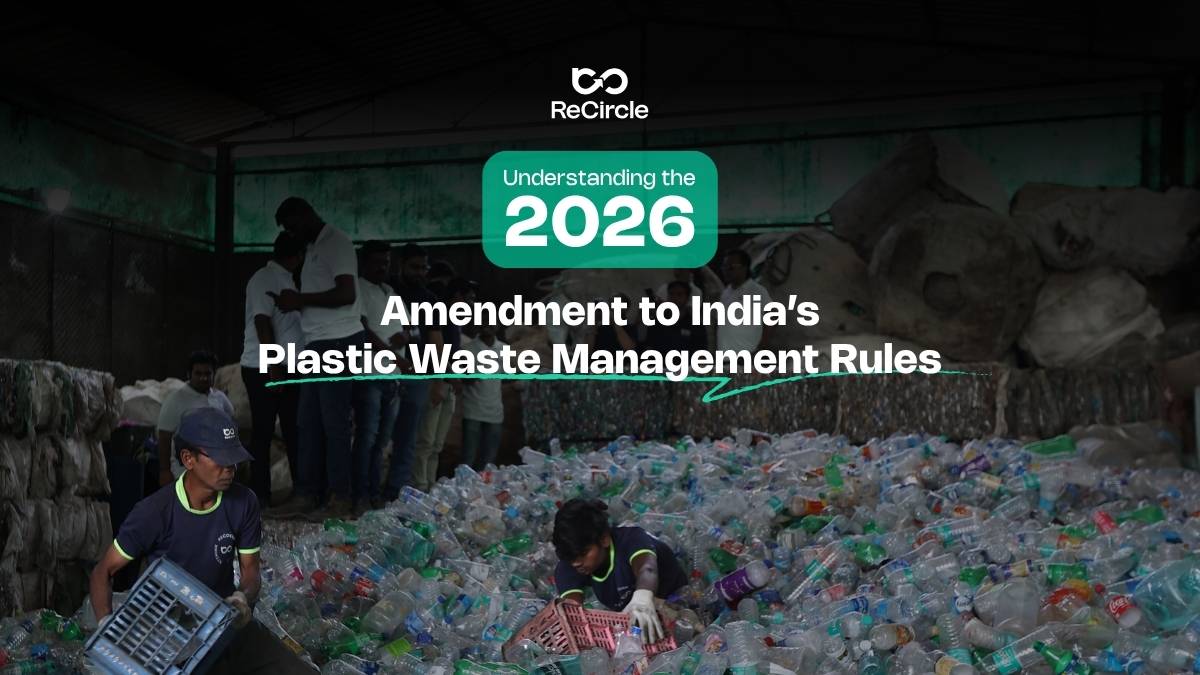
If you’ve been tracking India’s plastic waste management rules, you’ll know they don’t stay still for long. What started as a framework in 2016 has slowly turned into something far more detailed, and honestly, far more demanding.
The 2026 amendments mark a clear shift. It’s no longer just about avoiding banned plastics or ticking compliance boxes. The focus has moved to full lifecycle accountability. That means tracking packaging, proving where it ends up, and even controlling what goes into it.
At the center of this shift are three ideas: EPR for plastic waste, traceability, and recycled content targets. But once you look closer, there’s more going on beneath the surface.
Why the Plastic Waste Management Rules Keep Evolving
The plastic waste management rules were first introduced to create a basic system of accountability. Over time, however, it became clear that setting targets alone was not enough. The real issue was not the absence of rules, but the difficulty in verifying whether those rules were actually being followed.
For instance, producers could declare compliance, but there was limited ability for regulators to trace whether the declared recycling had genuinely taken place. Similarly, recycled plastic usage was often inconsistent and, in many cases, lacked quality benchmarks.
The 2026 amendments address these gaps by doing something quite fundamental. They connect three things that were earlier treated separately: material flow, data reporting, and physical verification. This is why the plastic waste management rules now feel more operational than regulatory.
What Are the Key 2026 Amendments in the Plastic Waste Management Rules?
1. Recycled Plastic Content Targets: From Percentages to Procurement Strategy
At first glance, recycled content targets look like simple percentages. In reality, they directly influence how businesses source their materials.
Packaging Categories include:
- Category I: Rigid plastic packaging (bottles, containers)
- Category II: Flexible plastic packaging
- Category III: Multi-layered plastic packaging
Year-wise Recycled Content Targets
| Year | Category I | Category II | Category III |
| 2025–26 | 30% | 10% | 5% |
| 2026–27 | 40% | 10% | 5% |
| 2027–28 | 50% | 20% | 10% |
| 2028–29+ | 60% | 20% | 10% |
These targets apply to producers, importers, and brand owners, but the complexity lies in how they are achieved.
The rules allow some flexibility through carry-forward provisions, where unmet targets from one year can be distributed over the next three years. However, this is not a free pass. Businesses must still meet at least one-third of the shortfall each year, which forces gradual compliance rather than delayed action.
Another important clarification is how compliance itself is defined. The plastic waste management rules now recognise multiple pathways, including recycling and end-of-life disposal methods such as co-processing in the cement industry, waste-to-energy conversion, and approved applications such as road construction. This broadens the compliance framework but also raises questions around sustainability quality, especially when compared to closed-loop recycling.
In practice, this means procurement teams cannot simply “buy recycled plastic.” They must ensure that the material meets regulatory standards, performs technically, and is traceable within the system.
2. EPR for Plastic Waste: Turning Responsibility into Measurable Output
EPR for plastic waste has been strengthened to ensure accountability throughout the packaging lifecycle.
Who Is Covered?
- Producers
- Importers
- Brand owners
- E-commerce entities
Core Obligations
- Mandatory registration on the CPCB portal
- Declaration of packaging quantities by material category
- Fulfilment of recycling or end-of-life disposal targets
- Submission of periodic returns and maintenance of records
The centralised portal also enables the exchange of EPR certificates, allowing entities to trade compliance credits in a fully traceable system.
Important clarification for importers:
Every unit of plastic introduced into the market must be matched with documented recovery or processing. This is supported by EPR certificates, which function as tradable proof of compliance within the system.
For importers, the rules go a step further. Recycled plastic already present in imported packaging does not count towards their obligations. Instead, they must fulfil targets through domestic mechanisms, often by purchasing certificates. This ensures that responsibility is not shifted outside India’s waste management ecosystem.
The plastic waste management rules, therefore, move EPR from a declaration-based system to a verification-based system, where documentation, traceability, and third-party validation all play a role.
3. Traceability: Making Every Unit of Plastic Accountable
Traceability has become a central enforcement tool under the plastic waste management rules.
What Is Required?
- Plastic packaging must include QR codes, barcodes, or unique identifiers
- Packaging must be traceable back to the producer or importer
Operational Impact
- Businesses must ensure suppliers provide traceable packaging
- Procurement records must align with traceability requirements
- Authorities can verify compliance through inspections and digital tracking
This creates a verifiable audit trail for packaging across the value chain. This is also where digital systems and internal tracking processes become necessary, as manual record-keeping is unlikely to keep pace with the level of detail required.
4. Reuse Obligations: Expanding Beyond Recycling
One of the more structural changes in the plastic waste management rules is the introduction of reuse targets, particularly for rigid plastic packaging.
| Packaging Type | 2025–26 | 2026–27 | 2027–28 | 2028–29+ |
| 0.9–4.9 litre/kg | 10% | 15% | 20% | 25% |
| ≥4.9 litre/kg (water) | 70% | 75% | 80% | 85% |
| ≥4.9 litre/kg (others) | 10% | 10% | 15% | 15% |
These targets require businesses to think beyond material selection and consider logistics systems that enable reuse.
In reality, reuse is far more complex than recycling. It involves reverse logistics, cleaning systems, inventory management, and customer behaviour. This makes it one of the most operationally demanding aspects of the plastic waste management rules.
5. Quality Standards and Labelling: Raising the Bar for Recycled Materials
The plastic waste management rules now require stricter quality and compliance standards for recycled plastic.
Key Requirements
- Compliance with IS 14534:2023 standards
- Mandatory marking indicating the use of recycled plastic content
- Additional labelling requirements for food-contact applications
This has a direct impact on material selection. Not all recycled plastic qualifies, especially in sensitive applications like food packaging, where additional regulatory requirements apply.
This means businesses must not only source recycled plastic but also validate its quality, origin, and compliance documentation.
This is one of the reasons why demand for high-quality materials is increasing within plastic recycling in India, as lower-grade recycled inputs may not meet regulatory expectations.
6. Compliance Verification: From Self-Declaration to Audit Systems
The 2026 amendments strengthen verification mechanisms within the plastic waste management rules.
Key Additions
- Introduction of registered environmental auditors
- Requirement for audit-ready documentation
- Increased scrutiny of compliance claims
This reduces reliance on self-declared reporting.
7. Decentralised Enforcement: Compliance Moves Closer to the Ground
Enforcement responsibilities are now distributed across multiple authorities:
- Urban local bodies
- Gram panchayats
- District-level authorities
- State-level monitoring committees
This decentralisation increases the likelihood of inspections and makes enforcement more consistent across regions.
How These Amendments Impact Businesses in Practice
The latest plastic waste management rules require businesses to rethink packaging strategies at a structural level rather than treating compliance as a standalone activity.
Key Challenges
- Securing a consistent supply of compliant recycled plastic
- Managing documentation, audits, and reporting requirements
- Ensuring supplier compliance with traceability and quality standards
- Adapting packaging formats to meet reuse obligations
Industry Impact
This shift is also influencing plastic recycling in India, where demand for high-quality recycled material is rising faster than supply. Businesses are increasingly required to align procurement, compliance, and sustainability functions.
Navigating Compliance in a Demanding System
As the plastic waste management rules become more detailed and enforcement becomes stricter, businesses are finding it increasingly difficult to manage compliance, material sourcing, and documentation in isolation.
This is where working with the right ecosystem partners starts to matter.
ReCircle works closely with brands and producers across India to support EPR compliance, traceability systems, and access to high-quality recycled materials such as rPET flakes.
By combining material supply with an understanding of compliance, our focus remains on helping businesses meet regulatory requirements without disrupting operations.
Connect with us to understand what the 2026 amendments mean for your business.