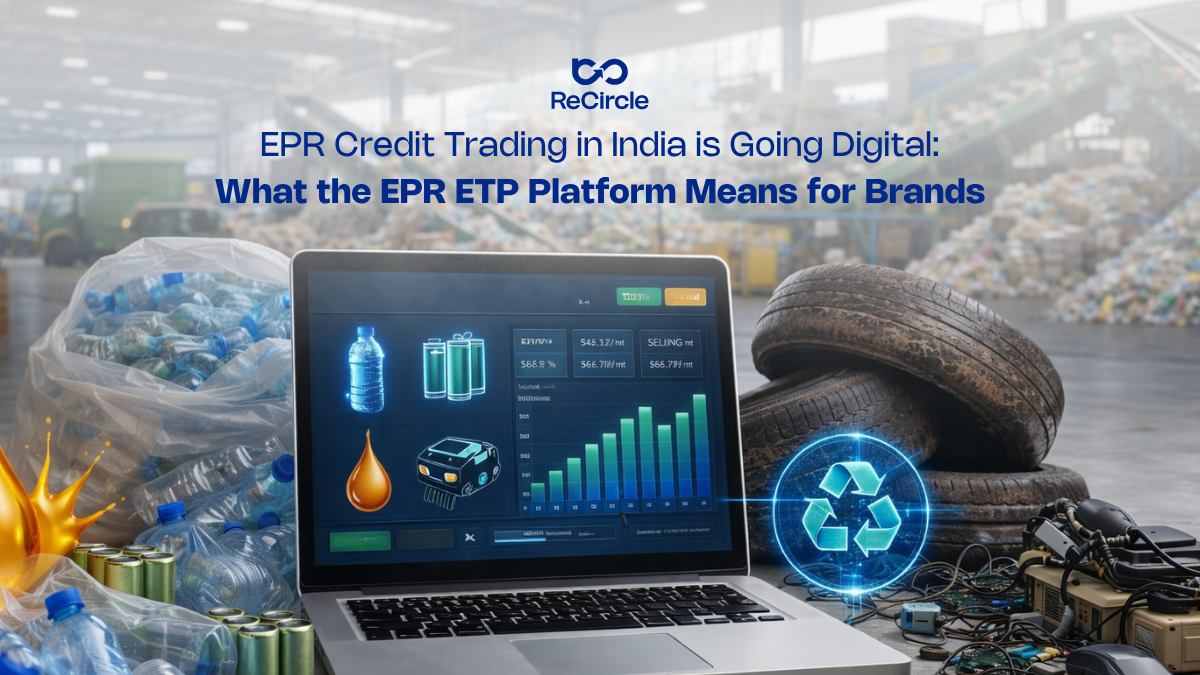
The EPR ETP platform is expected to go live soon, and while most conversations focus on what it is, very few are asking a more practical question. What will this actually change for brands on the ground?
Because the shift is not just digital. It changes how you plan, how you buy credits, and how exposed you are to risk.
Based on current information available through the CPCB framework and portal, the EPR ETP is being positioned as a centralised system to record and, potentially, enable the trading of EPR certificates in a more structured manner. But the real impact will be felt less in the platform itself and more in how the market around it begins to behave.
Why EPR ETP signals a reset in how brands handle compliance
The EPR ETP platform is being introduced to bring structure into a system that has operated with visible gaps for years.
Let’s not soften it.
The current ecosystem has struggled with:
- Unclear and inconsistent pricing of EPR credits
- Transactions that are difficult to verify end-to-end
- Limited visibility on whether recycling actually happened as claimed
- A tendency to treat compliance as a year-end adjustment rather than a planned activity
The platform attempts to organise this by creating a more trackable environment. As indicated by CPCB’s direction, credits will be recorded digitally, and transactions are expected to become more visible.
But here’s the part that matters. Once visibility increases, behaviour changes. And not always comfortably.
How the platform will change how brands experience the market
For brands, the EPR ETP will likely shift the credit procurement experience quite sharply.
Today, many businesses operate with a degree of flexibility. Pricing can be negotiated. Timelines can stretch. Adjustments can be made late in the cycle.
With a platform-led system, that flexibility may be reduced.
What could change:
- Pricing may start reflecting real demand and supply conditions
- Credits could become easier to compare, but harder to secure at the last minute
- Transactions may become more auditable, leaving less room for correction later
None of this has been officially confirmed in full detail, but based on how similar structured systems work, this is a reasonable expectation.
In simple terms, the market may become less forgiving.
What the EPR ETP means for your EPR obligation strategy
This is where the impact becomes very real.
The EPR ETP does not just change where you buy credits. It changes when and how you should think about them.
If your current approach is reactive, meaning you assess your shortfall and then procure credits towards the end, that approach may not hold up well in a more transparent system.
Instead, brands may need to:
- Plan credit requirements much earlier in the year
- Track obligations more closely across categories
- Work with recyclers in a more structured and ongoing way
- Align internal teams on data and reporting accuracy
We are likely to see a shift from transactional compliance to planned compliance.
And that shift is not small. It requires time, coordination, and clarity.
The platform could introduce new risks, not just fix old ones
There is an assumption that digital platforms make systems smoother. That is not always true in the early stages.
With the EPR ETP, a few risks may emerge, especially soon after launch:
- Credits may become scarce if demand concentrates early
- Prices could fluctuate as the market adjusts to visibility
- Brands may become dependent on a smaller pool of verified recyclers
These are not guaranteed outcomes, but they are patterns seen in other regulated digital markets.
So while transparency improves trust, it can also expose gaps faster than before.
Where recircle supports brands in this shift
The real challenge with the EPR ETP is not access. It is an interpretation.
Understanding what the platform enables is one thing. Understanding how it changes your decisions is another.
ReCircle is already working within the current EPR ecosystem while closely tracking how this transition is unfolding. The focus is on helping brands make sense of what is coming and adjusting their approach before the shift becomes compulsory.
This includes:
- Translating evolving guidelines into practical steps
- Building reliable recycler networks that can support long-term needs
- Helping brands plan credit sourcing instead of reacting to shortages
- Reducing uncertainty around pricing and availability
Once the system becomes more structured, delays become more costly.
What brands should do before EPR ETP goes live
With the EPR ETP expected soon, waiting for full clarity may not be the best strategy.
A more practical approach would be to start preparing now:
- Review your EPR targets in detail
- Identify how much of your requirement is already secured
- Evaluate the strength of your recycler partnerships
- Start aligning procurement and sustainability teams
- Build internal visibility on compliance progress
The idea is simple. Enter the platform prepared, not dependent.
What this shift really means
The EPR ETP is not just a new tool. It is a signal that the system is moving towards tighter control and higher accountability.
For brands, this likely means less room for adjustment and more need for planning.
In our view, those who treat this as an operational update may struggle. Those who treat it as a strategic shift may find better control over cost, compliance, and risk.
If you are still figuring out how this will affect your EPR obligations, this is the right time to get clarity. ReCircle is already working within this evolving system and can help you navigate what comes next with a more structured approach.
Frequently Asked Questions
- Inconsistent and unclear pricing of EPR credits
- Limited traceability of transactions
- Difficulty in verifying actual recycling outcomes
- Heavy reliance on last-minute compliance adjustments
- Plan credit procurement earlier in the compliance cycle
- Track obligations more closely across product categories
- Build long-term partnerships with verified recyclers
- Align internal teams on data accuracy and reporting
- Review and quantify your EPR obligations in detail
- Assess how much of your credits are already secured
- Strengthen recycler partnerships
- Improve internal coordination between teams
- Build better visibility into compliance progress