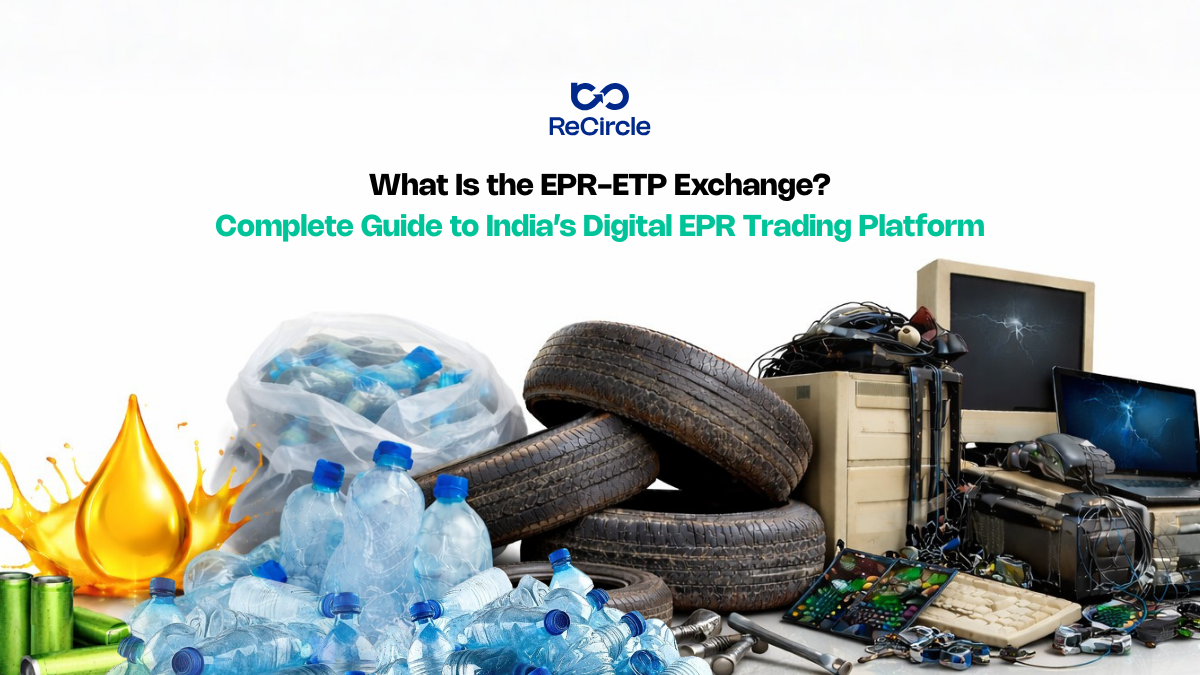
EPRETP is set to reshape EPR compliance in India. Understand what the EPR ETP platform is, how it may work, and how to prepare your strategy.
If you’ve been hearing about EPR ETP lately, you’re not alone. The platform is expected to be one of the most significant shifts in India’s EPR ecosystem, especially for businesses seeking to stay compliant without unnecessary complexity.
At its core, the system is being positioned as a digital exchange for EPR credits. And that’s exactly why this matters now. Even though the platform has yet to go live, it has already begun to influence how companies think about EPR compliance.
In simple terms, this upcoming credit trading platform will allow businesses to buy and sell EPR certificates. It connects producers, importers, brand owners, and recyclers in one place. And once EPR ETP goes live, it’s likely to reshape how organisations plan and execute their compliance strategies.
But what exactly is changing, and why does it matter now?
What is the EPR ETP platform & why is it being introduced?
EPRETP, or the Extended Producer Responsibility Electronic Trading Platform, is expected to serve as a centralised system for tracking and potentially trading EPR credits in a more structured way.
To understand why EPRETP is being introduced, it helps to look at how EPR currently works.
Under India’s EPR framework, producers, importers, and brand owners are required to meet recycling targets. These targets are typically met by working with registered recyclers that issue EPR certificates.
You can explore the current regulatory structure on the official CBCP ETP website.
What’s not fully standardised today is how these certificates move between parties. In many cases, transactions can be fragmented, with limited visibility on pricing and traceability.
EPRETP is expected to address this gap by creating a more transparent and trackable system. While the exact mechanics are yet to be officially defined, the intent behind EPRETP is fairly clear. Bring more structure, reduce ambiguity, and improve accountability.
How EPR-ETP might work in practice (based on current systems)
Since EPR ETP is not live yet, there is no officially published step-by-step workflow. However, based on existing CPCB portals and EPR processes, a likely structure can be understood.
Here’s what EPRETP may look like in practice:
- Recyclers generate EPR credits
This is already defined under the current EPR rules, in which recyclers upload verified data to generate certificates. - Credits are recorded within a central system
EPR ETP is expected to bring these credits into a more visible and standardised environment. - Producers assess their requirements
Businesses will still need to calculate how many credits they require to meet their obligations. - Credits may be selected or procured through the platform
If EPRETP functions like a trading exchange, this step could involve some level of price discovery. - Transactions are digitally tracked
One of the clearer expectations is improved traceability across the lifecycle of a credit.
It’s important to note that this is a policy-aligned interpretation, not a confirmed operational flow. The final structure of EPR ETP may evolve once official guidelines are released.
Why EPR ETP Could Change EPR Compliance in India
Even in its pre-launch phase, EPR ETP is already shaping conversations around compliance.
Here’s why:
- More visibility is expected
If EPR ETP centralises data, businesses may have clearer insight into credit availability. - Pricing may become more dynamic
A platform-based system could introduce demand- and supply-driven pricing, although this has not yet been officially confirmed. - Compliance could become stricter
With better tracking, it may become harder to rely on informal processes. - Decision-making may shift earlier
Companies might need to plan procurement more proactively rather than waiting until the last minute.
So while the platform is not fully defined yet, its potential impact is already quite real.
What challenges should businesses be prepared for?
With any system change, there are always a few friction points.
With EPR ETP, some expected challenges include:
- Uncertainty during the early phase
Since guidelines are still evolving, businesses may need to adapt quickly. - Possible price fluctuations
If trading is introduced, pricing could vary over time. - Operational alignment issues
Internal teams may need better coordination across sustainability, procurement, and compliance. - Dependence on verified supply chains
Access to reliable recyclers could become even more important.
None of these are confirmed outcome, but they are reasonable expectations based on how similar systems tend to evolve.
How ReCircle is preparing for the EPR ETP shift
While EPR ETP is still taking shape, the underlying EPR ecosystem is already active. And that’s where preparation becomes practical.
At ReCircle, we are already working within the current framework while aligning closely with how EPR ETP is expected to evolve.
This includes:
- Helping businesses understand their EPR obligations clearly
- Building access to verified recycler networks
- Creating more stable and traceable credit sourcing approaches
- Preparing for possible shifts in how credits are accessed and tracked
The idea is not to wait for EPR ETP to go live, but to be ready for it when it does.
Before the platform goes live, here’s what you should be thinking about
The expected rollout of EPR ETP signals a gradual but important shift in India’s approach to EPR compliance. The move seems to be towards more structure, more visibility, and better accountability.
At the same time, not every aspect of EPRETP has been formally defined yet. Which means businesses need to balance awareness with flexibility.
What’s becoming clear is this. EPR may no longer remain a purely compliance-driven activity. It is likely to require more planning, especially if the new platform introduces greater visibility into how credits are accessed.
At ReCircle, we are already engaging with this shift as it unfolds. Working with what is defined today, while preparing for what EPR ETP is expected to bring next.
If you’re still trying to understand how the introduction of this new platform could influence your current approach, it may be worth starting that conversation now. Not out of urgency, but to avoid being unprepared later.
Connect with our experts for better clarity!
Frequently Asked Questions
- Businesses partner with registered recyclers
- Recyclers generate EPR certificates based on verified recycling
- Credits are transferred through individual agreements
- Limited visibility exists on pricing and traceability
- Greater visibility into credit availability
- Potential for dynamic, market-driven pricing
- Stronger compliance tracking and reduced loopholes
- Need for earlier and more proactive planning
- Understand current EPR obligations clearly
- Build relationships with reliable recyclers
- Strengthen internal tracking and documentation
- Align teams across compliance and procurement