Recycled plastic has become the default answer to plastic waste. Governments mandate it, brands advertise it, and sustainability strategies often treat it as proof of progress. If more plastic is recycled, the problem must be shrinking.
That assumption is where things start to break down.
Plastic is not a single material, recycling is not a uniform process, and recycled plastic does not behave the same way once it enters the recovery system. What happens after disposal depends on material type, design choices, chemical compositions, contamination levels, and whether viable end markets even exist. This is why plastic pollution persists despite decades of recycling efforts.
This article examines how different recycled plastic moves through recovery systems and why recycling alone cannot address the plastic crisis.
Plastic Is Not One Material, and That Changes Everything
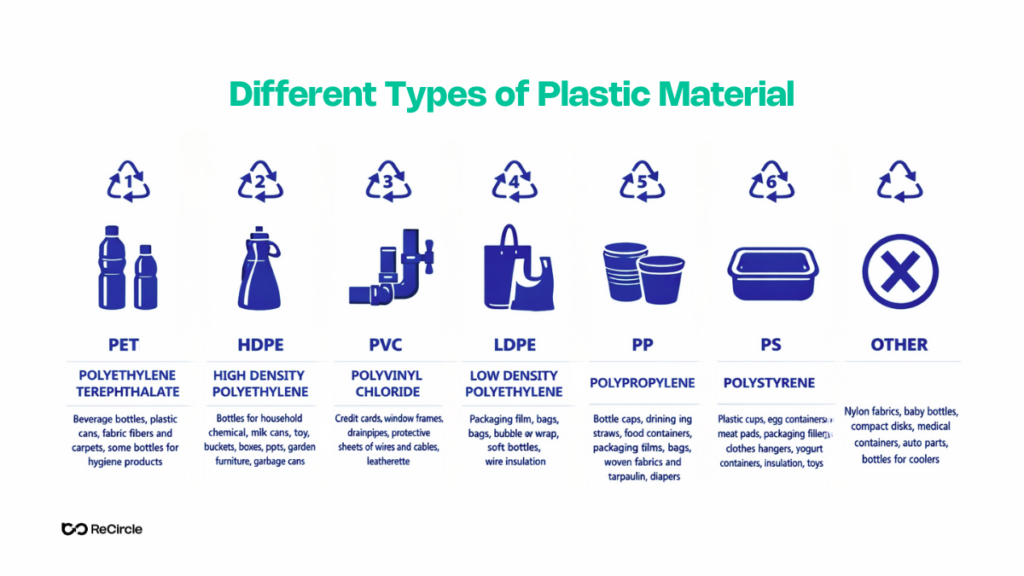
When people say “plastic,” they usually imagine a single substance. In reality, plastic is a family of materials. PET bottles, HDPE containers, LDPE films, polypropylene caps, polystyrene trays, and multilayer packaging all behave differently.
Each type melts at a different temperature, reacts differently to additives, and degrades at a different rate. Recycling systems were never designed to handle this level of complexity at scale. Studies indicate that mixing incompatible plastics can ruin entire batches of recycled plastic, making them unusable.
This is where the first disconnect appears. Consumers are told to recycle plastic broadly, but recovery systems require precision. That gap sets the stage for failure further down the line.
What Happens to Recycled Plastic Inside Recovery Systems
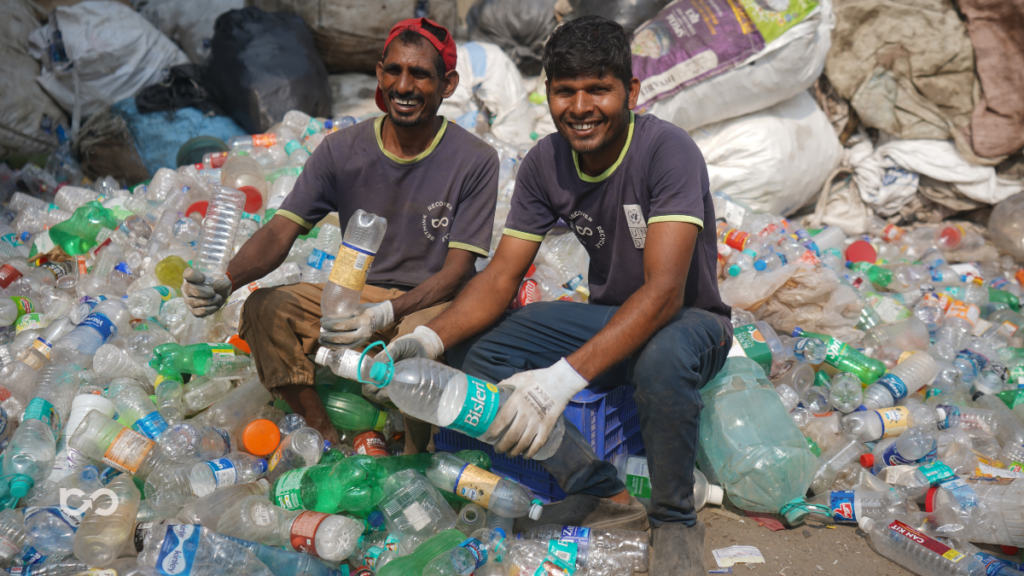
Once recycled plastic enters a Material Recovery Facility, or MRF, it moves through a combination of mechanical sorting, optical scanners, and manual labor. These systems are good, but they are not perfect.
Rigid plastics like PET bottles and HDPE containers are easier to identify and sort. Flexible plastics such as films, pouches, and wrappers often tangle machinery or slip through sorting lines. Multilayer packaging cannot be separated into usable materials at all using standard mechanical recycling.
Contamination from food residue, labels, dyes, and mixed materials significantly lowers recycling efficiency. Even when plastic reaches a recycler, only clean, properly sorted material becomes viable for recycling. All other elements are removed from the stream.
This naturally leads to the next question. If plastic makes it through sorting, does it get recycled endlessly?
Why Most Recycled Plastic Can Only Be Used Once or Twice
Unlike glass or metal, plastic polymers degrade with each recycling cycle. Heat and mechanical stress weaken the molecular structure. This process, known as downcycling, entails that recycled plastic is often converted into lower-value products such as textiles, benches, or pallets.
A study reported that only about 2% of plastic is recycled in a closed-loop system, meaning it is reused as the same product. Most recycled plastic eventually reaches a point at which it can no longer be reused and is sent to a landfill or incinerated.
This reality challenges a common assumption. Recycling does not create an infinite loop. It delays disposal, but it does not eliminate it.
Design Choices: Decide Whether Recycled Plastic Succeeds
If recycling struggles downstream, the root cause often lies upstream in product design. Packaging designed for cost, aesthetics, or shelf appeal often overlooks recyclability.
Dark pigments confuse optical scanners. Mixed materials cannot be separated. Excessive labels and adhesives increase contamination. According to the World Economic Forum, over 30 percent of plastic packaging is not recyclable due to design alone.
Recycling systems are forced to manage the consequences of these decisions. That is why focusing only on recycling misses the bigger picture. The problem starts long before the bin.
Why Recycling Alone Cannot Solve the Plastic Problem

Recycling is reactive. It deals with waste after it exists. But plastic pollution is fundamentally a design and consumption issue.
The waste hierarchy, supported by the United Nations Environment Programme, prioritizes reduction and reuse over recycling. Using less plastic, simplifying materials, and designing for durability have a far greater impact than relying on recycled plastic content alone.
Recycling remains important, but it cannot carry the entire burden. Expecting it to do so creates false confidence and slows real progress.
What a Smarter Plastic Strategy Looks Like
A more effective approach combines multiple actions.
- Reduce unnecessary packaging
- Shift toward mono-material designs
- Invest in reuse and refill systems
- Use recycled plastic where it makes sense and where quality can be maintained.
When these strategies work together, recycling becomes part of a system rather than the system itself. That is when recycled plastic delivers real value instead of symbolic comfort.
A Smarter Way Forward
Recycled plastic plays an important role, but it is often asked to solve problems for which it was never designed. Different plastics move through recovery systems in very different ways, and many never become usable material again. While recycling plays a crucial role in curbing the plastic crisis, it cannot fix a problem created by design, consumption, and scale.
Progress arises from understanding these limits and planning around them, rather than ignoring them. Smarter upstream material decisions reduce pressure downstream, where recycling struggles most.
If your organisation is ready to reassess its approach and make decisions backed by how recycling works on-ground, reach out to build a plastic recycling strategy that holds up in practise
Frequently Asked Questions
- PET (1): Beverage bottles and food containers
- HDPE (2): Milk cans, detergent bottles, rigid containers
- PVC (3): Pipes, blister packs, some flexible packaging
- LDPE (4): Plastic bags, shrink wraps, films
- PP (5): Caps, tubs, straws, food packaging
- PS (6): Thermocol, disposable trays and cups
- Multilayer / Others (7): Sachets, chip packets, pouches
- Waste is sorted using machines and manual labour
- Rigid plastics like PET and HDPE are easier to identify and recover
- Flexible plastics often slip through sorting lines or clog machinery
- Multilayer packaging cannot be mechanically recycled and is removed
- Contaminated material is rejected early