Extended producer responsibility is one of those terms that sounds complicated until you realise it is actually built on a straightforward idea.
If a company puts plastic into the market, it should also take responsibility for what happens to that plastic after it is used.
That is it. That is the heart of EPR in India.
As consumption in India grows, so does waste. Plastic packaging, bottles, wrappers, and containers move quickly from store shelves to homes and then into bins. What happens after that moment is exactly where India’s waste problem begins. EPR was introduced to fix this gap.
This guide walks you through EPR compliance for plastic waste in India. It provides a clear picture of what extended producer responsibility plastic is, why it matters, how it works, and how businesses can comply without chaos.
What Is Extended Producer Responsibility?
Extended producer responsibility is a policy framework introduced by the Government of India under the Plastic Waste Management Rules, 2016, and strengthened through amendments in 2022 by the Ministry of Environment, Forest and Climate Change (MoEFCC).
At its core, EPR means this:
If you manufacture, import, or sell plastic packaging, you are responsible for collecting, recycling, or safely disposing of an equivalent amount of plastic waste.
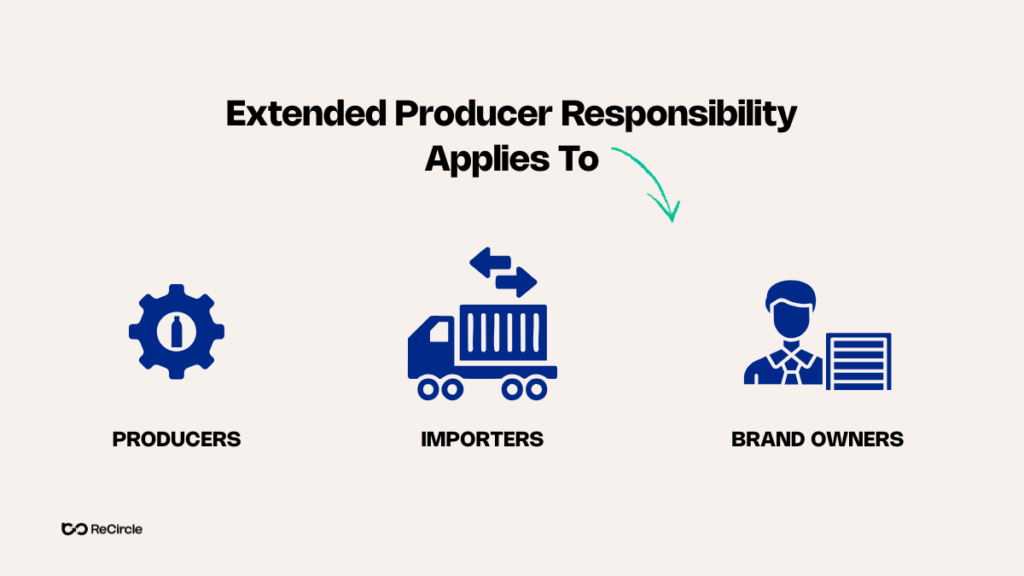
This responsibility applies to:
- Producers
- Importers
- Brand Owners
Together, they are referred to as PIBOs.
EPR is not optional. It is a legal requirement monitored by the Central Pollution Control Board (CPCB) through a national digital portal.
Why EPR Compliance Became Necessary in India
India generates over 3.5 million tonnes of plastic waste every year, according to CPCB data. A large portion of this waste ends up in landfills, drains, water bodies, or is burned informally.
Traditional waste systems were never designed to handle this scale.
Landfills are overflowing. Recycling rates remain uneven. Informal waste workers carry the burden without protection or fair systems. This is where plastic EPR steps in.
EPR was designed to:
- Reduce plastic pollution at the source
- Create accountability in supply chains
- Push recycling and reuse
- Support a circular economy instead of a throwaway one
Instead of asking municipalities to clean up endlessly, EPR asks a better question.
Who created this waste in the first place?
Who Needs to Follow EPR Compliance Rules?
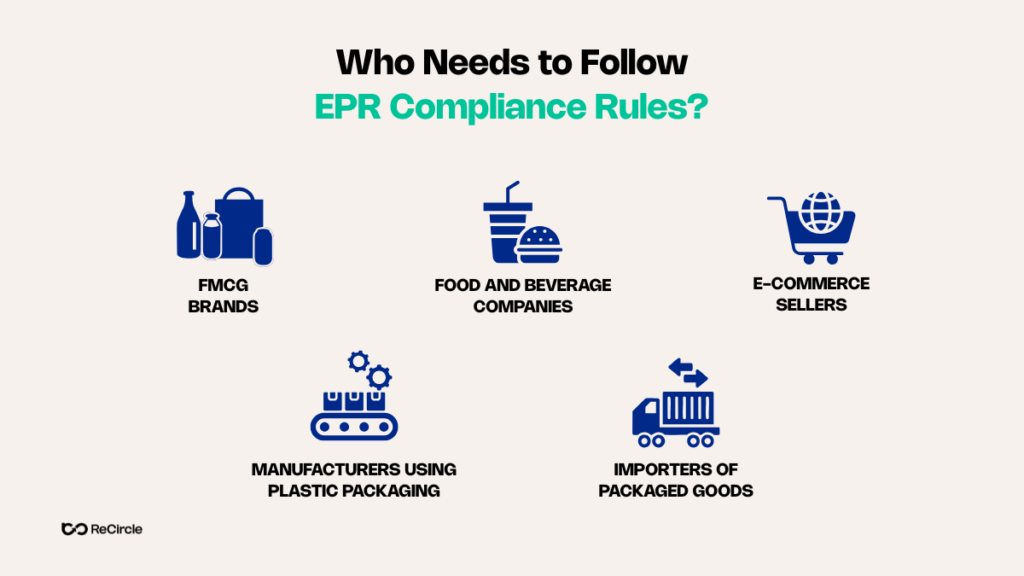
If your business introduces plastic into the Indian market in any form, EPR applies to you.
This includes:
- FMCG brands
- Food and beverage companies
- E-commerce sellers
- Importers of packaged goods
- Manufacturers using plastic packaging
Whether you operate from India or sell into India, EPR India regulations apply.
Many businesses assume EPR is only for large corporations. That is not true. Even mid-sized and growing brands are legally required to comply with extended producer responsibility plastic rules.
Understanding EPR Compliance for Plastic Waste
When people hear EPR, they often think it is just paperwork. In reality, EPR for plastic waste management is a system built on traceability.
Under the current rules, plastic packaging is divided into categories:
- Rigid plastic
- Flexible plastic
- Multi-layered plastic
- Compostable plastic
Each category has specific recycling or end-of-life obligations. Brands must ensure that a defined percentage of the plastic they introduce into the market is:
- Collected
- Processed
- Recycled or end-of-life managed through CPCB-authorised recyclers and processors
This is where plastic waste management under EPR becomes operational, not theoretical.
The EPR Registration Process, Step by Step
The EPR registration process happens through the CPCB’s centralised EPR portal.
Here is how it works:
First, a company registers itself as a PIBO on the portal. This requires business credentials, product details, and plastic packaging data.
Next, the company submits its EPR action plan. This outlines how it plans to meet its plastic EPR obligations.
Then comes execution. Brands must work with authorised recyclers or EPR partners to collect and process waste.
Finally, EPR credits are generated, tracked, and reported digitally. These credits prove compliance.
Annual returns and compliance reports must be filed to stay authorised.
This system is designed to be transparent, but without proper EPR compliance support, it can quickly become confusing.
Common Challenges Businesses Face With EPR
Most EPR failures do not happen because companies want to avoid responsibility. They happen because the system is complex.
Some common challenges include:
- Incorrect plastic data reporting
- Difficulty finding verified recyclers
- Misunderstanding EPR targets
- Portal delays and documentation errors
- Risk of non-compliance penalties
This is why businesses increasingly rely on EPR compliance services instead of managing everything internally.
Why Choosing the Right EPR Partner Matters
EPR is not just about ticking boxes. It is about building a reliable waste management system that regulators trust.
A strong EPR partner provides:
- Access to authorised recycler networks
- Transparent waste traceability
- Accurate EPR credit management
- End-to-end documentation support
- Regulatory clarity
By working with EPR compliance partners, businesses reduce risk and save time.
For brands operating at scale, this partnership is the difference between annual compliance stress and smooth long-term compliance.
How ReCircle Supports Plastic EPR in India
ReCircle operates at the intersection of technology, traceability, and ethical waste management.
As a leading plastic EPR provider in India, ReCircle supports brands with:
- EPR registration and reporting
- Verified plastic waste collection
- CPCB-compliant recycling channels
- Digital traceability of waste flows
- Support for informal waste workers
ReCircle works closely with authorised recyclers and waste management companies in Mumbai and across India to ensure plastic waste is handled responsibly.
This is not just compliance. It is system-building.
What Happens If You Do Not Comply?

Non-compliance is not a minor issue.
Penalties can include:
- Financial fines
- Suspension of business operations
- Cancellation of CPCB authorisation
- Legal action under environmental laws
As enforcement tightens, compliance with plastic waste management under EPR is becoming non-negotiable.
Why EPR Is Here to Stay
India’s environmental regulations are only moving in one direction. Stricter. More digital. More transparent.
EPR is a foundational pillar of India’s circular economy vision. It aligns waste management with climate goals, resource efficiency, and economic inclusion.
Businesses that invest early in strong EPR services in India are not just complying. They are future-proofing their operations.
Take Control of Your Plastic EPR Compliance
EPR compliance is no longer optional, and getting it wrong can lead to fines, operational disruptions, and regulatory risk.
If your business places plastic packaging in the Indian market, now is the time to act.
Connect with our EPR experts to streamline your plastic EPR compliance, manage CPCB requirements, and stay audit-ready at every stage.